
சாக்லேட் திங்க ஆசையா?
குழந்தைகளே! அம்மாவிடம் அடம் பிடித்து காசு வாங்கியவுடன் என்ன செய்வீர்கள்? கடைக்கு ஓடி கண்ணாடிக் குடுவைக்குள் இருக்கும் கண்ணைப் பறிக்கும் வண்ணக் கலரில் உள்ள சாக்லேட்டைத் தானே வாங்குவீர்கள். அந்த வண்ணக் கலர் பிளாஸ்டிக் காகிதத்தையா உண்கிறீர்கள்? இல்லை, உள்ளே உள்ள சாக்லேட்டைத் தானே சாப்பிடுகிறீர்கள்.
ஏன் வெறும் 3 கிராம் எடை கொண்ட சின்ன சாக்லேட் துண்டுக்கு கலர்கலராய் 3 வகை உறைகள் தெரியுமா? எல்லாமே நம்மளை ஏமாற்றத்தான். நாம் அந்த சாக்லேட் உறைக்கும் சேர்த்துத்தான் காசு கொடுக்கிறோம் என்பதை மறந்துவிடக் கூடாது. சாக்லேட்டை வாங்கிய உடனேயே எங்கே அதைப் பிரிக்கிறோமோ அங்கேயே விட்டெறிந்து விடுகிறோம் இல்லையா? நீங்கள் விட்டெறிந்த அந்த உறையை, குப்பையை உங்கள் வயதை ஒத்த ஏழைச் சிறுவர், சிறுமிகள் பொறுக்கி எடுத்துச் செல்வதைப் பார்த்திருக்கிறீர்களா? அவர்கள் அதை என்ன செய்கிறார்கள்? உடைந்த கண்ணாடி, காகிதம், பிய்ந்த செருப்பு, பிளாஸ்டிக் பை இவற்றை பழைய பொருட்கள் வாங்கும் கடையில் விற்றுவிடுவார்கள். அதன் மூலம் அவர்களுக்கு கொஞ்சம் பணம் கிடைக்கிறது.
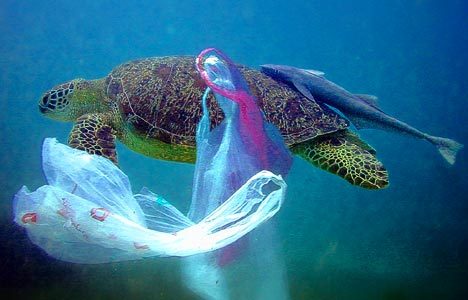
சரி, அந்த சாக்லேட் உறையை யாரும் பொறுக்காமல் விட்டால் என்ன ஆகும்? காற்றடிக்கும் திசையில் எல்லாம் பறந்து நாம் நடக்கும் பாதையெல்லாம் இறைந்து கிடப்பதைப் பார்த்திருக்கிறீர்களா? பிளாஸ்டிக் பை, பிளாஸ்டிக் பொருட்கள் மண்ணோடு மண்ணாக மக்காமல், அப்படியே கிடந்து நிலத்தை பாழ்படுத்திக் கொண்டிருக்கும். அப்படியில்லாத நிலையில், சாக்கடையில் விழுந்து அடைத்துக் கொள்ளும். பிறகு சுத்தம் செய்யும்போது ஆற்றில் சேர்ந்து பின்னர் கடலுக்குச் சென்றுவிடும். இதனால் எந்தப் பிரச்னையும் இல்லை என்று தானே நினைக்கிறீர்கள்? அதுதான் இல்லை. அந்த சாக்லேட் தாளை மீன்கள் சாப்பிட்டுவிட்டு வயிற்றில் சிக்கி இறந்து போகவும் நேரலாம்.
உங்கள் பள்ளியில் படிக்கும் மாணவர்கள் எல்லாம் ஒரு நாளைக்கு ஒரு சாக்லேட் தின்றுவிட்டுத் தூக்கி எறியும்போது எத்தனை பிரச்னைகள் ஏற்படும்? உங்கள் ஊரில், ஏன் இந்தியாவிலுள்ள அனைத்து சிறுவர், சிறுமியரும் சாக்லேட் தின்றுவிட்டு உறையை தூக்கி எறிந்தால் ஏற்படும் பிரச்னை எவ்வளவு பெரியது. எவ்வளவு குப்பைகள் சேரும். அதெல்லாம் சாக்கடையில் விழுந்தால் சாக்கடை முழுமையாக அடைத்துக் கொள்ளும், இல்லையா. பிறகு வீட்டைச் சுற்றி சாக்கடை தண்ணீர் தேங்கி நிற்கும். துர்நாற்றத்தையும், கொசுத் தொல்லையையும் பொறுத்துக் கொள்ள முடியாது. நிம்மதியாக படிக்க முடியாது, சாப்பிட முடியாது, நிம்மதியாக தூங்கவும் முடியாது. சரி, அத்தனை குப்பையும் கடலில் கலந்தால், எத்தனை மீன்கள், உயிரினங்கள் சாகும்? மற்றொரு உயிர் அழிவதை நாம் விரும்புவதில்லை, இல்லையா.
சரி, அப்படியானால் நாம் என்ன செய்ய வேண்டும்?
குப்பைகளை கண்ட இடத்தில் போடாமல், குப்பைத் தொட்டியில் போடப் பழக வேண்டும். நீங்களே அட்டைப் பெட்டியில் குப்பைத் தொட்டி செய்து, அதில் பழைய காகிதம், பிளாஸ்டிக், கண்ணாடி பாட்டில் போன்ற வீட்டில் தேவைப்படாத பொருட்களைச் சேகரித்து விற்கலாம். அதில் கிடைக்கும் பணத்தை நோட்டு வாங்கவோ, புத்தகம் வாங்கவோ பயன்படுத்திக் கொள்ளலாம். அப்பா, அம்மாவும் பாராட்டுவார்கள்.
இனிமேல் காசு கிடைக்கும்போது, சாக்லேட் வாங்குவதற்கு பதிலாக பழங்களைச் சாப்பிட்டால் உடலும் ஆரோக்கியமாக இருக்கும். அவற்றின் தோலும் எளிதில் மக்கிப் போகும்.
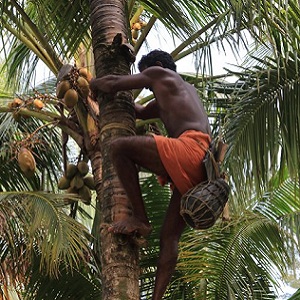
Sustainable Livelihood of Palm workers and their families by Value adding to Palm Juice
Introduction
ARULAGAM proposed to initiate “Value addition to Palm Juice ( Neera) to sustain the livelihood of Palm workers and their families, with the aim of preserving, bottling and marketing the Palm juice using cost effective appropriate methods and technologies. This project was supported by National Research and Development Corporation (NRDC) with 1,00,000/ to undertake and implement the proposed plan with the active involvement of palm workers. The uncertain income from palm juice extracted from the trees, which should be processed and sold out within 4 hours because of that the palm juice will get fermented. In order to overcome the problems, preserving the palm juice using appropriate processing methods to keep the juice (Neera) for longer time in ensuring sustainable livelihood options of the families involved palm juice extraction work. ARULAGAM has adapted the following strategic approaches to make success of the project to be replicated and sustained for long term:
1. Selection of area for implementation
In and around Koviloor village in Dindigul district, where palm extraction works have been traditionally practiced by the palm workers, with whom ARULAGAM had established rapport and relationships with 40 palm extraction workers and made transparency on the project implementation for the future sustainability. The palm workers and women had rendered their cooperation and involvement in the proposed activities. During the season (Usually January to June), every day 100 litres of Neera were collected from the palm juice extraction workers for processing and marketing, as the preliminary initiative.
Initiatives launched by ARULAGAM to make the process into successful one with the following activities:
- Identification of beneficiaries
- Rapport building and project orientation meeting with different stakeholders
- Purchase of materials and instruments
- Installation of instrument and work site preparation
- Pilot phase activity with few beneficiary Selection of beneficiaries
- Organize training for product preparation
- Organize training for managing the activity
- Assess market options
- Market linkages & Cost benefit analysis
- Rapport with various outlets
- Actual selling of NEERA and Follow up action
2. Preserving the Palm Juice
- The white palm sap, at initial stages (when collected) does not ferment (non-alcoholic) and tastes very sweet.
- As the time passes the sap get fermented, intoxicates and tastes sour.
- The fermented liquid is known as 'Palm Wine' or Kallu (Tamil).
- As the palm sap gets fermented very quickly, they apply lime on the surface of the pot as a preservative.
- The lime prevents quick fermentation.
After extraction of palm juice from the trees ,usually early in the morning, are collected from the individual palm workers and preservation measures had been adapted with the technical support and guidance rendered by Prof Dr. David Ravindran (Gandhigram rural University) and Mrs. Anbu Vakini( Nutrient Specialist ), to enhance the production and without changing the tastes and quality of the juice while marketing.
ARULAGAM has established one processing unit at the field where the proposed initiatives have to b launched in order to make easy accessibility to procure the extracted palm juice immediately after extraction and to process the juice in the field itself.
Steps involved in processing and preserving the extracted palm juice
All the men and women of the Palm families involved in preserving of palm juice preservation using simple methods which are cost effective, with these methods, rate of decomposition of palm juice is minimized or arrested and enable the juice to keep for more than 2 to 40 days. The variances in retaining taste of preserved juice are affected by many factors such as tastes varies with pH of juice , trees, time of collection, location of trees, climatic conditions, applying lime etc. these are the factors we faced as problems. So we encountered the problems of storing the packed juice in days which varies from 2 -40 days. So ARULAGAM team decides to market the products to understand their preference over the tastes and quality.
3. Packing and Marketing of Palm Juice
In this way, the preserved Palm juice is marketed in the form of sealed bottles. On considering the costs of making tetra pack, ARULAGAM considers the bottles for re-use of the same in the coming months with frequency.
ARULAGAM marketed the bottled Palm juices in Dindigul and Karur with the support and encouragements of Khadi showrooms in Karur District and fruit juice shops in Dindigul District. During this period, we faced much hindrance in marketing the juice, as we are not that much expertise in marketing strategies. So, ARUALGAM arranged Palm Juice Introductory Functions both in Karur and Dindigul in which Mr. M.P. Gurusamy, Economist, Mr. Krishnan, Secretary of Palm Worker’s Society, Mr. Pamayan, Environmentalist, Mr. Gopalakrishnan, Politician, noted Doctors and entrepreneurs participated and insisted the need of using palm juice as health drink with many nutrient values, instead of artificially flavoured beverages. This meeting helps to spread the message to reach the people. The programme ends with the documentary film “ Open of Insight” depicts the life of the blind palm worker involved in this work for years.
Lobbying with Government in Expanding marketing sources at state level
Based on our experiences and encouragements in marketing the bottled palm juice in Dindigul and Karur regions, ARULAGAM decides to spread the methods throughout the state, and meet the Tamil Nadu Khadi Department officials at Kuralgam, Chennai where they appreciated the initiatives and render encouraging ideas. We also made an attempt to make powder from the palm juice and get succeeded to some extent with the help of Mr. Siddiq who is the Food processing in charge of the Gandhigram Trust, Dindigul.
At the time, we met Mr.Kumari Anandan, The Chairman of Tamilnadu Palmyrah Development Board, and other officials of Tamil Nadu Palm Products Development Board. He appreciated our initiatives and promised to promote the methods for the welfare and livelihood of palmyrah workers. He assured to recommend the method to the Mr.M. Karunanithi, Chief Minister of Tamil Nadu and discussed about it. With the keen interest, our Chief Minister has recently initiated a project for packaging Neera (Padhaneer) in tetra-pack. The product will be marketed by Aavin, the milk co-operative. It is the success to our lobbying work to make changes in the lives of families involved in Palm juice extraction traditionally.
ARULAGAM is glad to note that on account of sustained effort of Arulagam and its effective lobbying with Palmyrah Development Board, the Government of Tamil Nadu has recently initiated a project for packaging Palm Juice in Tetra-pack and palm related products.
This is a great success story for Arulagam. We have fulfilled the mission of providing self employment for the palm workers of Tamil Nadu.
4. Media coverage
All the programmes on value added palm juice have been spread through various dailies and magazines in Tamilnadu as news and articles (enclosed as annexure) on the use of Bottled Palm juice to reach the people.
5. Future initiatives planned to be implemented by ARULAGAM
ARULAGAM plans to add value to Palm Juice (Neera) with the production of the following products by involving the women of the Palmyra workers to empower and sustain their livelihoods throughout the year.
- Formation of Palm worker family groups in terms of share holding groups, that is every palm extraction family holds a share by supplying the extracted palm juice to the processing unit.
- They families will receive the amount for the juice supplied to the processing unit.
- The family members- women- involve in processing, preservation, packing and marketing the palm juice by exploring marketing outlets and sources with ARULAGAM.
- Profit sharing to the share holding family members ( usually during non-season period)
- Promoting market outlet for the value added products like Gur, Crystal sugar making, Palm candy production, other than palm juice marketing.
- These strategies will enhance the livelihood options and ensured employment opportunities to the women throughout the year, especially during non- palm juice season (July- December)
Gur
When Neera is converted into a solid or semi-solid crystal line mass it is called gur. It has got a wide use as sweetening agent in Indian village food products. Palm gur has a characteristic smell of its own.
Crystal Sugar Making
The initial process of sugar making is practically the same as that of gur. In this case also, juice is de-limed, filtered and boiled. The juice when it reaches 110°C temperature is poured in the crystalliser.
Palm Candy
Like palm gur, palm candy has also its importance among the products of Neera. It is being produced and used since procuring sweet Neera from palmyra has been known. It has got its various uses in Ayurvedic medicinal preparation as well as direct use for thrist,Urine trouble and body heat, small pox, and cough and cold
Plant Growth Promoter
The unused Palm juice can be used as plant growth promoter instead of chemical fertilizer.
6. Planting of Palm Tree Saplings
ARULAGAM is planned to plant 1 million palm seeds along the coast lines not only to promote palm cultivation in considering the sustainable livelihood options for the families involved in palm works, but also creating green belt along the coast lines to prevent the harmful effects of heavy flood waves and Tsunami.
7. Acknowledgement
On behalf of Arulagam sincerely thank to National Research and Development Corporation (NRDC) for their support services to undertake and implement the project into success and the following eminent personalities in promoting and sustaining lives of Palmyrah workers:
- Mr. M. Karunanithi, Honorable Chief Minister of Tamil Nadu
- Mr. Kumari Anandan, Former Member in Parliament and Chairman, Tamil Nadu Palmyra Development Board
- Mr. K. Ramachandran, Honorable Minister for Khadi and officials of Khadi Industries.
- Dr. David Ravindran of Gandhigram Rural University
- Mrs. Anbuvahini, Nutrient specialist.
- Mr. Siddique, Food processing unit, Gandhigram
Submitted to:
National Research and Development Corporation (NRDC)
Hydroelectric Projects and their impact on the Landscape and River Moyar
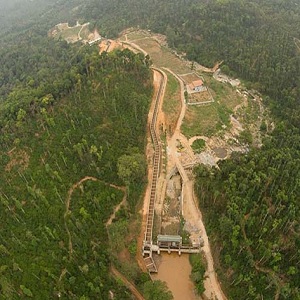
Critical to the characterization process is the impact of Hydro-electric power projects in the Nilgiris, which have a distinct bearing not only on the river course and the river basin through dams and associated power houses, but also due to river course manipulation and the subsequent linkages that have been forged.
Pykara is one of the highest of south Indian streams originating in the Mukurti peak at an altitude of around 2400m ASL. It is the biggest stream in the Nilgiris Plateau. The stream flows over a number of cascades and waterfalls that it provides a drop of about 1000m before it reaches the Pykara Dam at Glenmorgan. Downstream, Pykara joins the River Moyar and eventually River Cauvery through its tributary, the River Bhavani.
The Pykara Hydroelectric Project Scheme was the first hydroelectric project that the state of Tamil Nadu (erstwhile Madras) launched and successfully implemented. The Project that was formally sanctioned during the British rule in 1929 was meant to generate and supply electricity for the industries in Coimbatore. Situated in the Nilgiris Plateau, the Pykara HP stands out as the highest in Asia and continue to be amongst the highest of hydroelectric projects in the world (source: Pell Frischmann Group and TNEB).
The Pykara Ultimate Stage Hydroelectric Project (PUSHEP) that was completed during the beginning of the 21st century was formally inaugurated in September 2005. The power generation capacity of PUSHEP is 150 MW.
Temporal and Spatial spread
The Pykara HP has been implemented in stages over a period of 75 years; PUSHEP being the final one. The spadework for the Project started in 1932. The first power-generating units were small with a capacity of 6.5 MW. Three such units were installed in the powerhouse located at Glenmorgan taking advantage of the run-of-river water alone. In order to enhance the available flow, two regulating storages were added.
These storages were located at Mukurti (upstream) and Pykara (downstream). The additional flow thus achieved enabled the installation of more power generation units. Subsequently, another storage dam was built across the Sandynallah stream. This reservoir was built to regulate and divert flows from a catchment of 44.03km² into the Pykara Dam. The network of reservoirs thus built helped achieve the set target of generating 70 MW of electricity.
In 1955, the Nilgiris Plateau experienced yet another major transformation due to the Kundah Hydroelectric Scheme. The Kundah HS led to the creation of Avalanche Dam (372m long; 57.66m high) and Emerald Dam (328.6m long; 65.72m high) around Portimund within the Kundah basin. A 733.77m long horseshoe-shaped tunnel that had the capacity to discharge 900 cusecs of water connected the two dams. The Avalanche and Emerald streams were tributaries that directly fed Pykara before the dams were constructed.Two other dams were constructed across the tributaries of Pykara in 1965; Parson’s Valley Dam (14.5km²) and Portimund Dam (10.6km²). These dams enhanced the volume of water that got diverted into the Kundah basin.
The Naduvattam Diversion Project completed in 1976 harnessed water from the 12.82km² Naduvattam basin that lies to the west of Pykara basin. In order to augment further the power generation capacity of the Pykara HP, water was diverted from the 12.95km² Lone Valley and Melkodmund stream in the Nilgiris Plateau; both streams flowed between Pykara and Sandynallah. The huge volume of water thus diverted into the Pykara Dam necessitated the enlargement of the fore bay. The enlargement of the Pykara fore bay was completed in 1978-79.
During the 1990s when the Pykara HP was in its final stage of implementation (PUSHEP) it had a well-established network of reservoirs that harnessed water from a catchment fed by Pykara, Sandynallah, Naduvattam, Melkodmund and Lone Valley streams (tributaries of River Moyar). The catchment has provided the gross storage necessary for making PUSHEP operational and generating the additional 150MW of electricity that was envisaged).
During 1946-52, the Moyar Hydroelectric Scheme was implemented. The Scheme was implemented using the tail water of the Pykara HP. The project is located at a distance of 16km downhill of the Pykara (Glenmorgan) power station. The Moyar HS also benefits by the water that is diverted from the Maravakandy Dam (located north-east of Masinagudi) through a flume channel. At Maravakandy there is a mini-hydroelectric scheme capable of producing 2.6 MW of power (Tyagi, 1995). The Maravakandy-Moyar flume channel is 6.81km long and 10.86m wide. The Moyar Ultimate Stage Hydroelectric Project (MUSHEP) that was proposed in 1995-1996 had envisaged the widening of the flume channel by another 2m. The channel that is around 2m deep had 19 bridges across it; 3 wide (5-11m), 16 narrow (1-5m) and 3 underground passages. The various hydroelectric projects that were implemented since 1932 in the Nilgiris Plateau together established a 53km network of tunnels (INO, 2007).
Building a Grassroots Constituency to Conserve the River Moyar in the Mysore-Nilgiri Corridor
Social Assessment to ensure compliance to CEPF Policy on Indigenous People
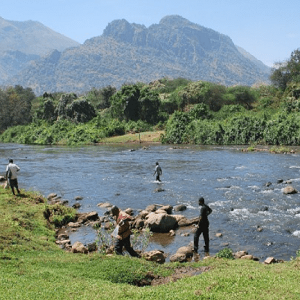
We proposed the project titled ‘Building a Grassroots Constituency to Conserve the River Moyar in the Mysore-Nilgiri Corridor on the premise that conservation programmes in the region have until date largely been perfunctory. We also found it ideal to propose a programme that takes a landscape approach rather be constrained by a politically or administratively defined unit, to ensure that the coverage is vast and uniform. The third and the most important factor that motivated us to propose this project is the fact that conservation research or programmes in the proposed project area have hitherto been very scarce in studying or involving human communities. It needs to be mentioned though that there have been a number of anthropological inquiries on the indigenous communities of the Nilgiris, largely during the Colonial period.
The proposed project design which takes the course of River Moyar as the deciding factor, covers at least five panchayats (decentralized grass root level planning and administrative units). This coverage though is not uniform. While the three panchayats viz Masinagudi, Mudumalai and Sholur would be most critical, the other two cover the fringe areas.
In-depth demographic studies of the three panchayats have not been carried out in the past; our preliminary assessment suggests that the landscape is home to the following broad categories of humans viz.
- Early settlers – largely during Pre-Colonial period who are now under the scheduled caste category of backward and most backward residing as homogenous units
- Recent settlers – mostly migrants in search of livelihoods
- Recent settlers – tribal communities – mostly communities in search of livelihood opportunities, landless labour and communities displaced from adjacent districts.
- Scheduled Tribes / Indigenous tribal communities – the original residents of the landscape, a number of endogamous groups. Notable for their involvement in the protection of the landscape. View themselves as custodians of the forest. Strong presence of customary rights and regulation in the use of natural resources. Notable are the Kurumbas (and their four sub-groups) and Irulars. Scheduled Tribes.
- The Scheduled Caste communities – considered the lowest in caste hierarchy. Not recognized by any past intervention in the landscape.
In view of the above, and also the past experience of working in other landscapes we propose the following:
The key outcome of the proposed project is the micro-plan, taking into consideration the following aspects:
- the project will not propose or create new jobs or provide dole in any form
- the project will recognize traditional and local institutions where indigenous and tribal communities are represented
- the project will ensure that no community is excluded because of their caste or tribal identity
- the project will ensure that marginal groups within the communities such as women are represented strongly.
- the project will attempt to understand and incorporate local cultural beliefs and norms for micro planning and will not seek to alter the same.
The project will be implemented only after consultations are held at the field level. These will be facilitated by the Gram sabha (an entity that is strictly voluntary and representative of all the communities) and the elected panchayat.
The proceedings of these consultations will be developed into mutual agreements.
The project will be jointly implemented with the Gram sabha and the panchayat. And as detailed in the proposal, it will be subjected to local review.
The Gram Sabha and the elected Panchayat for each community where the project will be implemented will function as a grievance mechanism for Indigenous People or other local communities who have any concerns or grievances about the project to raise them with the project team. In the unlikely event that a grievance is raised, Arulagam will ask the relevant Gram Sabha or Panchayat to convene a meeting between the project team and the affected parties, in order to resolve the conflict.
Arulagam will seek to hold these meetings within one month of any grievance being communicated to them. Any grievance raised will be communicated to CEPF, together with minutes from the meeting held to address them, plus a detailed plan of remedial action.
Long term sustainability of the project will be ensured will the project team working closely with the Gram Sabha and the Panchayat to develop proposals for the consideration of the State and Central Government, Other Non governmental organizations and Donor Agencies.
As a collaborative group of institutions striving to reconcile conservation and development goals, we appreciated the safeguards policy of CEPF and shall strive to adhere to all the issues/concerns and terms listed in the policy document.
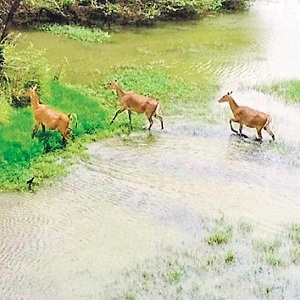
Indirect Sightings of Animals Recorded in River Transect Walk
S.No. |
Name of the Species |
Indirect Evidence |
Encounter Rate/km |
% Encounter Rate |
|---|---|---|---|---|
| 1 | Tiger (Panthera tigris) | 7 | 0.2 | 2.4 |
| 2 | Leopard (Panthera pardus) | 5 | 0.1 | 1.7 |
| 3 | Sloth Bear (Melursus ursinus) | 10 | 0.2 | 3.4 |
| 4 | Wild Dog or Dhole (Cuon alpinus) | 4 | 0.1 | 1.4 |
| 5 | Striped Hyena (Hyena hyena) | 2 | 0.0 | 0.7 |
| 6 | Chital (Axis axis) | 70 | 1.5 | 23.8 |
| 7 | Sambar (Rusa unicolor) | 26 | 0.6 | 8.8 |
| 8 | Blackbuck (Antilope cervicapra) | 2 | 0.0 | 0.7 |
| 9 | Black-naped Hare (Lepus nigricollis) | 3 | 0.1 | 1.0 |
| 10 | Asiatic Elephant (Elephas maximus) | 101 | 2.2 | 34.4 |
| 11 | Gaur (Bos gaurus) | 5 | 0.1 | 1.7 |
| 12 | Feral Buffalo (Bubalus sp.) | 12 | 0.3 | 4.1 |
| 13 | Wild Pig (Sus scrofa) | 6 | 0.1 | 2.0 |
| 14 | Indian Porcupine (Hystrix indica) | 17 | 0.4 | 5.8 |
| 15 | Bonnet Macaque (Macaca radiata) | 3 | 0.1 | 1.0 |
| 16 | Oriental Small-clawed Otter (Aonyx cinerea) | 6 | 0.1 | 2.0 |
| 17 | Bengal Monitor Lizard (Varanus bengalensis) | 1 | 0 | 0.3 |
| 18 | Marsh Crocodile (Crocodylus palustris) | 14 | 0.3 | 4.8 |
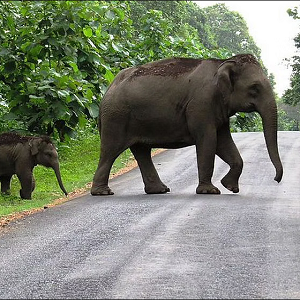
Direct Sightings of Animals Recorded in River Transect Walk
S.No. |
Name of the Species |
# sightings |
# individuals |
Mean group size |
Encounter Rate/km |
|---|---|---|---|---|---|
| 1 | Chital (Axis axis) | 9 | 110 | 12.2 | 2.39 |
| 2 | Sambar (Rusa unicolor) | 3 | 6 | 2 | 0.13 |
| 3 | Blackbuck (Antilope cervicapra) | 3 | 6 | 2 | 0.13 |
| 4 | Asiatic elephant (Elephas maximus) | 3 | 11 | 3.7 | 0.24 |
| 5 | Gaur (Bos gaurus) | 3 | 8 | 2.7 | 0.17 |
| 6 | Feral Buffalo (Bubalus sp.) | 4 | 37 | 9.25 | 0.81 |
| 7 | Wildpig (Sus scrofa) | 2 | 3 | 1.5 | 0.07 |
| 8 | Bonnet Macaque (Macaca radiata) | 12 | 86 | 7.17 | 1.87 |
| 9 | Tufted Gray langur (Semnopithecus priam) | 13 | 159 | 12.23 | 3.46 |
| 10 | Indian Giant Squirrel (Ratufa indica) | 6 | 7 | 1.17 | 0.15 |
| 11 | Oriental small-clawed otter (Aonyx cinerea) | 1 | 2 | 2 | 0.04 |
| 12 | Bengal Monitor Lizard (Varanus bengalensis) | 3 | 3 | 1 | 0.07 |
| 13 | Marsh Crocodile (Crocodylus palustris) | 10 | 14 | 1.4 | 0.30 |
| 14 | Indian Rock Python (Python molurus molurus) | 1 | 1 | 1 | 0.02 |
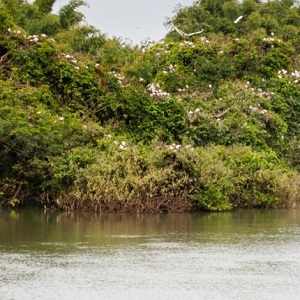
List of Riparian Plants Found Along River Moyar
S.No. |
Family |
Species |
Habit |
Nativity |
|---|---|---|---|---|
| 1 | Combretaceae | Terminalia cuneata Roxb | Tree | Native |
| 2 | Fabaceae | Pongamia pinnata (L.) Pierre | Tree | Native |
| 3 | Myrtaceae | Syzygium cumini (L.) Skeels | Tree | Native |
| 4 | Ebenaceae | Diospyros malabarica (Desr.) Kostel. | Tree | Native |
| 5 | Euphorbiaceae | Homonoia riparia Lour. | Shrub | Native |
| 6 | Sapotaceae | Madhuca neriifolia (Moon) H.J. Lam. | Tree | Native |
| 7 | Euphorbiaceae | Trewia nudiflora L. | Tree | Native |
| 8 | Anacardiaceae | Mangifera indica L. | Tree | Native |
| 9 | Melastomataceae | Memecylon umbellatum Burm. | Tree | Native |
| 10 | Poaceae | Bambusa bambos Voss | Tree | Native |
| 11 | Rubiaceae | Ixora pavetta Andr. | Tree | Native |
| 12 | Lythraceae | Lagerstroemia microcarpa Wight | Tree | Native |
| 13 | Meliaceae | Azadirachta indica A. Juss. | Tree | Burma |
| 14 | Caesalpiniaceae | Bauhinia racemosa Lam. | Tree | Native |
| 15 | Sapindaceae | Schleichera oleosa (Lour.) Oken | Tree | Native |
| 16 | Rubiaceae | Canthium coromandelicum (Burm. F.) Alston | Shrub | Native |
| 17 | Meliaceae | Aglaia elaeagnoidea (Juss.) Benth. | Tree | Native |
| 18 | Celastraceae | Pleurostylia opposita (Wall.) Alston | Tree | Native |
| 19 | Celastraceae | Cassine glauca (Rottb.) Kuntze | Tree | Native |
| 20 | Bignoniaceae | Stereospermum colais (Buch.-Ham. ex Dillw.) Mabb. | Tree | Native |
| 21 | Rhamnaceae | Ziziphus mauritiana Lam. | Tree | Native |
| 22 | Salicaceae | Salix tetrasperma Roxb. | Tree | Native |
| 23 | Loganiaceae | Strychnos nux-vomica L. | Tree | Native |
| 24 | Rubiaceae | Pavetta indica L. ex K. Schum. | Shrub | Native |
| 25 | Verbenaceae | Vitex leucoxylon L.f. | Tree | Native |
| 26 | Fabaceae | Dalbergia latifolia Roxb. | Tree | Native |
| 27 | Solanaceae | Datura sanguinea Ruiz & Pavon | Shrub | Tropical America |
| 28 | Rubiaceae | Mitragyna parvifolia (Roxb.) Korth. | Tree | Native |
| 29 | Euphorbiaceae | Phyllanthus polyphyllus Willd. | Tree | Native |
| 30 | Verbenaceae | Vitex altissima L.f. | Tree | Native |
| 31 | Euphorbiaceae | Drypetes roxburghii (Wall.) Hurusawa | Tree | Native |
| 32 | Caprifoliaceae | Viburnum punctatum Buch. - Ham. ex D. Don | Liane | Native |
| 33 | Tiliaceae | Grewia tiliifolia Vahl. | Tree | Native |
| 34 | Mimosaceae | Prosopis juliflora (Sw.) Dc. | Tree | Tropical America |
| 35 | Myrtaceae | Psidium guajava L. | Tree | Native |
| 36 | Rhamnaceae | Ziziphus oenoplia (L.) Mill. | Liane | Native |
| 37 | Combretaceae | Terminalia elliptica Willd. | Tree | Native |
| 38 | Boraginaceae | Cordia monoica Roxb. | Tree | Native |
| 39 | Rutaceae | Glycosmis mauritiana (Lam.) Tanaka | Shrub | Native |
| 40 | Caesalpiniaceae | Tamarindus indica L. | Tree | Tropical Africa |
| 41 | Ulmaceae | Celtis timorensis Spanoghe | Tree | Native |
| 42 | Melastomataceae | Memecylon grande Retz. | Tree | Native |
| 43 | Rutaceae | Atalantia monophylla (L.) Correa | Tree | Native |
| 44 | Euphorbiaceae | Jatropha curcas L. | Shrub | Tropical America |
| 45 | Caesalpiniaceae | Cassia fistula L. | Tree | Native |
| 46 | Rubiaceae | Psydrax dicoccos Gaertn. | Tree | Native |
| 47 | Oleaceae | Olea dioica Roxb. | Tree | Native |
| 48 | Rutaceae | Pleiospermium alatum Swingle | Tree | Native |
| 49 | Euphorbiaceae | Bischofia javanica Blume | Tree | Native |
| 50 | Moraceae | Ficus microcarpa L.f. | Tree | Native |
| 51 | Sapotaceae | Mimusops elengi L. | Tree | Native |
| 52 | Meliaceae | Cipadessa baccifera (Roth) Miq. | Tree | Native |
| 53 | Mimosaceae | Entada pursaetha DC. | Liane | Native |
| 54 | Verbenaceae | Lantana camara L. | Shrub | Tropical America |
| 55 | Tiliaceae | Grewia serrulata DC. | Tree | Native |
| 56 | Burseraceae | Garuga pinnata Roxb. | Tree | Native |
| 57 | Verbenaceae | Premna latifolia Rozb. var. latifolia | Tree | Native |
| 58 | Bignoniaceae | Radermachera xylocarpa (Roxb.) K.Schum. | Tree | Native |
| 59 | Euphorbiaceae | Phyllanthus emblica L. | Tree | Native |
| 60 | Dipterocarpaceae | Shorea roxburghii G. Don. | Tree | Native |
| 61 | Moraceae | Ficus hispida L.f. | Tree | Native |
| 62 | Caesalpiniaceae | Cassia spectabilis DC. | Tree | Tropical America |
| 63 | Salvadoraceae | Salvadora persica L. | Tree | Native |
| 64 | Euphorbiaceae | Aporosa acuminata Thw. | Tree | Native |
| 65 | Rubiaceae | Catunaregam spinosa (Thunb.) Tirvengadum | Tree | Native |
| 66 | Loganiaceae | Strychnos potatorum L. | Tree | Native |
| 67 | Combretaceae | Combretum albidum G. Don | Liane | Native |
| 68 | Fabaceae | Dalbergia paniculata Roxb. | Tree | Native |
| 69 | Ebenaceae | Diospyros montana Roxb. | Tree | Native |
| 70 | Rhamnaceae | Ziziphus xylopyrus (Retz.) Willd. | Tree | Native |
| 71 | Sapindaceae | Sapindus emarginatus Vahl | Tree | Native |
| 72 | Caesalpiniaceae | Senna occidentalis (L.) Link | Shrub | Tropical America |
| 73 | Euphorbiaceae | Breynia vitis-idaea (Burm.f.) Fischer | Shrub | Native |
| 74 | Meliaceae | Walsura trifolia (A. Juss.) Harms | Tree | Native |
| 75 | Erythroxylaceae | Erythroxylum monogynum Roxb. | Tree | Native |
| 76 | Sapindaceae | Filicium decipiens (Wight & Arn.) Thw. | Tree | Native |
| 77 | Verbenaceae | Tectona grandis L.f. | Tree | Native |
| 78 | Combretaceae | Anogeissus latifolia (Roxb. Ex DC.) Wall | Tree | Native |
| 79 | Caesalpiniaceae | Senna didymobotrya (Fresn.) Irwin & Barneby | Shrub | Non Native |
| 80 | Smilacaceae | Smilax zeylanica L. | Shrub | Native |
| 81 | Rutaceae | Chloroxylon swietenia DC. | Tree | Native |
| 82 | Boraginaceae | Cordia obliqua Willd. | Tree | Native |
| 83 | Sterculiaceae | Helicteres isora L.ShrubNative | ||
| 84 | Hernandiaceae | Gyrocarpus asiaticus Willd. | Tree | Native |
| 85 | Combretaceae | Terminalia bellirica (Gaertn.) Roxb. | Tree | Native |
| 86 | Apocynaceae | Carissa carandas L. | Shrub | Native |
| 87 | Celastraceae | Maytenus heyneana (Roth) Raju & Babu | Shrub | Native |
| 88 | Simaroubaceae | Ailanthus excelsa Roxb. | Tree | Native |
| 89 | Euphorbiaceae | Phyllanthus reticulatus Poir. | Shrub | Native |
| 90 | Rubiaceae | Psilanthus wightianus (Wight & Arn.) J. Leroy | Shrub | Native |
| 91 | Myrtaceae | Syzygium tamilnadensis Rathakr. & Chithra | Tree | Native |
| 92 | Mimosaceae | Albizia lebbeck (L.) Willd. | Tree | Native |
| 93 | Bixaceae | Bixa orellana L. | Tree | Tropical America |
| 94 | Euphorbiaceae | Glochidion zeylanicum (Gaertn.) Juss. | Tree | Native |
| 95 | Ulmaceae | Trema orientalis (L.) Blume | Tree | Native |
| 96 | Moraceae | Ficus benjamina L. | Tree | Malaysian |
| 97 | Myrsinaceae | Ardisia solanacea Roxb. | Tree | Native |
| 98 | Bignoniaceae | Dolichandrone atrovirens Sprague | Tree | Native |
| 99 | Moraceae | Ficus benghalensis L. | Tree | Native |
| 100 | Euphorbiaceae | Ricinus communis L. | Shrub | Tropical America |
| 101 | Moraceae | Ficus tsjahela Burm.f. | Tree | Native |
| 102 | Fabaceae | Derris scandens (Roxb.) Benth | Liane | Native |
| 103 | Meliaceae | Swietenia mahagoni (L.) Jacq. | Tree | Native |
| 104 | Mimosaceae | Albizia amara (Roxb.) Boivin | Tree | Native |
| 105 | Burseraceae | Commiphora caudata (Wight & Arn.) Engler | Tree | Native |
| 106 | Caesalpiniaceae | Delonix regia (Boj. ex Hook) Rafin. | Tree | South East Asia |
| 107 | Ebenaceae | Diospyros ferrea (Willd.) Bakh. | Shrub | Native |
| 108 | Moraceae | Ficus mollis Vahl | Tree | Native |
| 109 | Euphorbiaceae | Givotia rottleriformis Griff. | Tree | Native |
| 110 | Tiliaceae | Grewia hirsuta Vahl. | Shrub | Native |
| 111 | Olacaceae | Olax scandens Roxb. | Liane | Native |
| 112 | Euphorbiaceae | Bridelia crenulata Roxb. | Tree | Native |
| 113 | Poaceae | Dendrocalamus strictus (Roxb.) Nees | Shrub | Native |
| 114 | Fabaceae | Erythrina variegata L. | Tree | Native |
| 115 | Moringaceae | Moringa concanensis Nimmo ex Gibs. | Tree | Native |
| 116 | Rubiaceae | Wendlandia thyrsoidea (Schultes) Steud. | Shrub | Native |
| 117 | Rhamnaceae | Ziziphus glabrata Heyne ex Roth | Tree | Native |
| 118 | Mimosaceae | Acacia leucophloea (Roxb.) Willd. | Tree | Native |
| 119 | Alangiaceae | Alangium salvifolium (L.f.) Wang. | Tree | Native |
| 120 | Mimosaceae | Albizia saman (Jacq.) F.v. Muell. | Tree | Tropical America |
| 121 | Bignoniaceae | Dolichandrone arcuata (Wight) Clarke | Tree | Native |
| 122 | Bignoniaceae | Dolichandrone falcata (Wall.ex DC.) Seem. | Tree | Native |
| 123 | Moraceae | Ficus racemosa L. | Tree | Native |
| 124 | Flacourtiaceae | Flacourtia ramontchi L' Hér | Tree | Native |
| 125 | Lythraceae | Lawsonia inermis L. | Shrub | Native |
| 126 | Rubiaceae | Morinda pubescens J.E. Smith | Tree | Native |
| 127 | Pandanaceae | Pandanus odoratissimus L.f. | Shrub | Native |
| 128 | Euphorbiaceae | Phyllanthus indofischeri Bennet | Tree | Native |
| 129 | Anacardiaceae | Spondias pinnata (L.f.) Kurz | Tree | Native |
| 130 | Apocynaceae | Wrightia arborea (Dennst.) Mabberley | Tree | Native |
| 131 | Apocynaceae | Wrightia tinctoria (Roxb.) | Tree | Native |
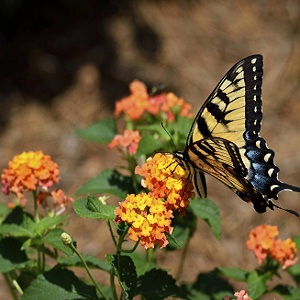
Butterfly Attracting Trees & Bushes
- Ivory Wood: Wrightia tinctoria
- Star Cluster: Pentas lanceolata
- Indian Caper: Capparis sepiaria
- Aristolochia: Aristolochia bracteolata
- Cherry Pie: Heliotropium arborescens
- Pink snakeweed: Starchytarphata mutabilis
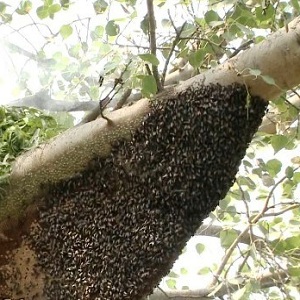
Nectar Yielding Trees and Bushes
Nectar yielding trees
- Red Silk Cotton: Bombax ceiba
- Flame of the forest: Butea monosperma
- Indian Coral Tree: Erythrina indica/verigata
- Erythrina: Erythrina suberosa
- Eryrhina: Erythrina stricta
- Bottle Brush: Callistemon lanceolatus
- Gliricidia: Gliricidia_sepium
- Indian Cork Tree: Millingtonia hortensis
- Badminton ball tree: Parkia biglandulosa
- Jacaranda: Jacaranda mimosifolia
- Tulip Tree: Spathodea campanulata
Nectar yielding bushes
- Erythrina: Erythrina crista-galli
- Tubular Hibiscus: Hibiscus rosa-sinensis
- East Indian Screw Tree: Helecteres isora
- Powder-puff: Calliandra haematocephala
- Orange Trumpet Flower: Tecoma smithii
- White Silk Cotton: Cochlospermum gossypium
- Scarlet-Sterculia: Firmiana colorata
- Scarlet bush: Hamelia patens
- Cup and Saucer Bush: Holmskioldea sanguinea
- Fire-Flame Bush: Woodfordia fruticosa
- Pink snakeweed: Stachytarpheta mutabilis
- Queen's Wreath: Petrea volubilis
Subcategories
Wildlife Article Count: 42
Vulture Conservation Article Count: 27
River Moyar Conservation Article Count: 6
Tiger Conservation Article Count: 3
Renewable Energy Article Count: 1
Petitions Article Count: 1
Publications Article Count: 1
Articles Article Count: 21
Community Article Count: 12
Nursery and Afforestation Article Count: 7
Coastal Conservation Article Count: 1
Page 22 of 25