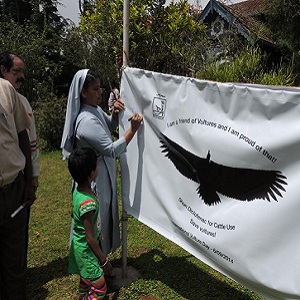
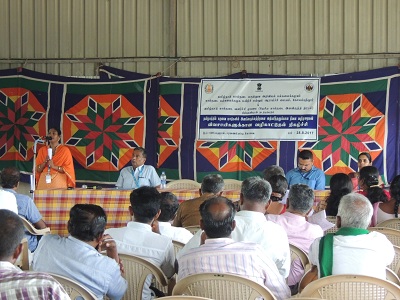
Human Chain rally @Punsai Puliampatty
Human Chain Rally @Punsai Puliampatty Against Diclofenac

Date : 06th Feb,2014 Place : Puliampatti Market Time : 10.30 - 11.30 AM
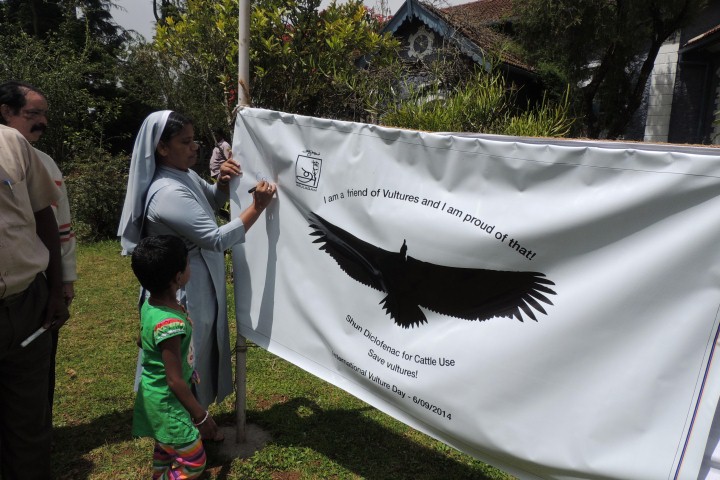
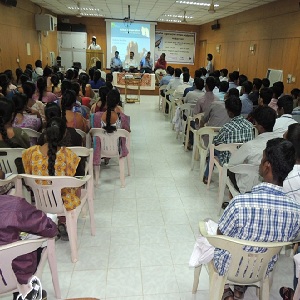
Arulagam with the support of CEPF and in co-ordination with TamilNadu Forest Department is working towards the conservation of Vultures. As part of the ongoing conservation work, human chain rally against the use of Diclofenac,a banned drug for Cattle happened at Puliampatti. Accepting our invitation, Bhavani sagar MLA Mr.P.L.Sundharam presided over the function while Mr.P.A.S.Anbu, Punsai puliampatti President inaugurated the function. Mr.P.Selvam, District Panchayat Head,Erode also participated in the function. Various environmentalists and nature lovers participated in the event.So as to emphasize the importance of Vultures, their importance to the environment & human beings and also to inform the people about their plight especially to Cattle owners, the function was held at Puliampatti Weekly market. On behalf of Vulture conservation team Mr.Kalyanasundaram welcomed the gathering. Mr.Venkitachalam, Researcher explained to the people about Vulture conservation.In tamil, Paaru means Vultures and the words were used by tribals. Bill boards and banners were placed at various places in and around the propaganda areato attract and drum beat the importance of Vultures and shun the banned drug Diclofenac for cattle. Pamphlets were also distributed to the people requesting the people to stop administering Diclofenac for cattle. Mr.Paraman,Arulagam Sathyamangalam co-ordinator arranged for the function.
Synchronized Vulture Survey - Feb 2014
In co-ordination with Tamil Nadu Forest Department, Arulagam organized Synchronized Vulture Survey in Nilgiri North Forest Division and Sathyamangalam Tiger Reserve on 21st, 22nd & 23rd Feb'14.
About 30 bird watchers volunteered their time and participated in the survey, The synchronized survey was carried out using Vantage Point survey method. Eleven Vantage Points were selected in Sathamangalam Tiger Reserve and nine in Nilgiri North Forest Division for this purpose. The occurrence of the vultures in different habitats were recorded.
Burgur Cattle Show
Burgur Semmarai breed cattle show and Vulture conservation propaganda

Place: Thurusanampalayam Date: 08-02-2014 Time: 10.30AM
Gudalur Human Chain Rally
Human chain for Establishing Vulture safe zone conducted at Gudalur on 30 Dec'13
Date: December 30, 2013
Venue: Bus Stand, Gudalur, Nilgiri District
Organisers: Arulagam and Tamil Nadu Forest Department
Target group: Veterinarians, Pharmacy owners, Cattle growers and public
Purpose: To spread awareness about endangered vultures and threat to vulture populations because of Diclofenac drug.
Medium: Human chain, Personal interaction and printed materials.
Funding / Collaboration: CEPF
As a part of the diclofenac free campaign, today 30/12/2013, Vulture conservation awareness cum Human chain was organized by Arulagam in Gudalur bus terminal, Udagamandalam. The human chain rally was inaugurated by the people representative Mrs. G. Ramamani, Chairman, Gudalur Municipality. Mr.Tejaswi, IFS, DFO Gudalur, Mrs.Indurani, Chairman, Panchayat Union, Gudalur, Mr. S.K. Lachiyathambiduarai, BDO, Gudalur, Vulture brigade members from Anaikatty & Siriur village and Volunteers from Bharathiar University Arts & Science college also participated. Mr. S. Bharathdasan, Secretary, Arulagam lead the rally and appealed to Veterinarians, Pharmacy owners, Cattle growers, and the public to join hands to establish a vulture safe zone by eliminating Diclofenac for cattle usage.
Dr. S. Srinivasan, Additional Director, Animal Husbandry said that Govt of India banned Diclofenac for cattle usage in 2006 and we use only Meloxicam, an alternate safe drug. He also reiterated that it is illegal and unethical for any vets or pharmacy shops selling and injecting human diclofenac to cattle. Moreover, it's an offense and the Government has the right to withdraw their License and they will get maximum imprisonment.
Mr.Boominathan, Coordinator, WWF-India spoke about the vultures in Moyar Valley and their importance in the landscape. He also insisted carcasses poisoning also could be a reason for vulture declining in the landscape.
Shun diclofenac awareness poster was handed over to Dr.S. Srinivasan, Additional Director, Animal Husbandry Department, Gudalur. Since Gudalur holds multi linguistic people like Malayalam, Tamil, Kannada and also indigenous people such as Irulas, Betta krumba and Kattu Naickar the awareness spread in all those languages. Message in English sent by Mr. Chris Bowden, Programme Manager, Saving Asia’s Vulture from Extinction was also read on that occasion. Representative from Kattunaika community Mr. Marigan, Betta gurumba community Mr. Suresh, Irula community Mr. Mari, Baduga community Mr.Sundararajan and Malayali community Mr. Sugumar also took part in this rally.
During this programme slogans were raised for vulture conservation. Awareness posters and banners on diclofenac were displayed. Vulture cap adorned by the participants attracted the viewers. Posters and bit notices on vultures distributed to the public including pharmacy owners. The event was organised by Arulagam team Venkitachalam, Paraman , Murgesan , Vulture brigade members & volunteers.
This programme got wide public attention rather than hall meeting. So, we have planned to repeat this in a small town in coming months.
Drug Controller Raid
Drug Inspectors investigate reports of human painkillers being used for cattle
The State Drug Control Department is investigating reports of a painkiller meant for human use being diverted for veterinary purposes in the hilly areas of Western Tamil Nadu. It may be recalled that the particular painkiller meant for cattle had already been banned, as the remains of the drug in the carcass of cattle endangered the lives of vultures. Pharmacies located in Gudalur, Thalavadi, and Sathyamangalam, besides Sirumugai, Mettupalayam and Annur, have been put under surveillance following reports of Diclofenac Sodium being sold for use for treating sick cattle.
White-backed vulture chick rescue, rehabilitation and release
Written by S. Bharathidasan and Mrs. Vaidehi Herbert
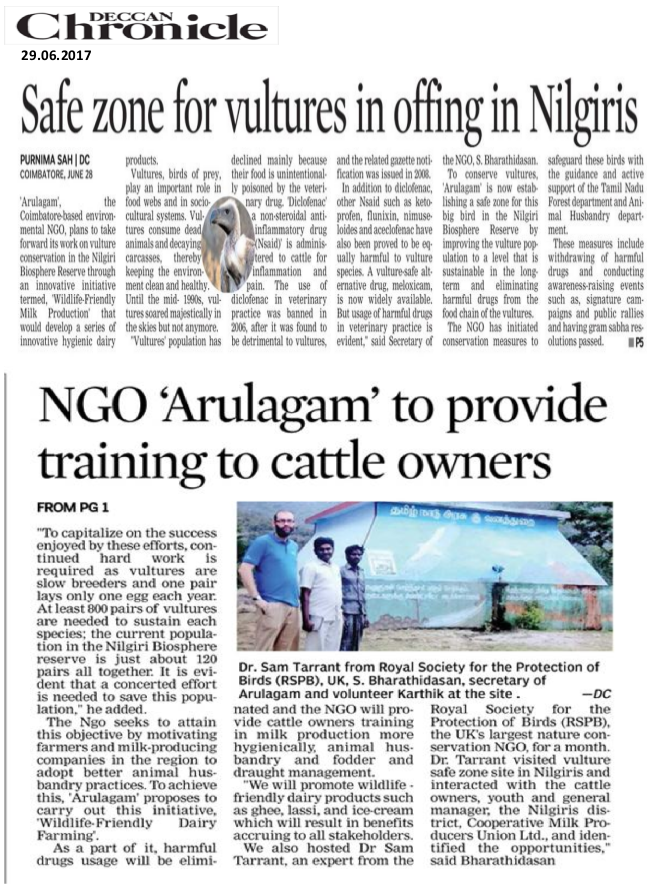
On September 7, the International Vulture Awareness Day aimed to bring awareness to vulture conservation activities and the threats that some species are facing. Here S. Bharathidasan from Arulagam, an NGO working towards the conservation of fauna and flora in Tamil Nadu, India, writes about his recent experience saving a white-backed vulture chick.
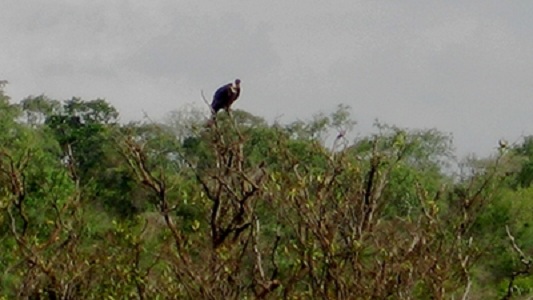
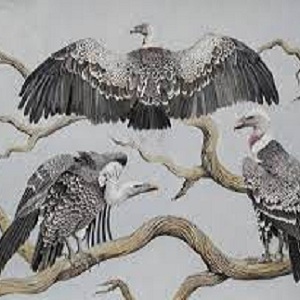
A robust scavenger, the Critically Endangered white-backed vulture (Gyps bengalensis) was once described as “possibly the most abundant large bird of prey in the world.” But an extremely rapid population decline (more than 99 percent) resulted from the birds ingesting the carcasses of animals treated with Diclofenac, an anti-inflammatory drug used to treat domestic livestock.
With the support of CEPF through its investment in the Western Ghats Region of India, Arulagam and Saving Asia’s Vulture from Extinction (SAVE) have devised a plan for a vulture safe zone – an area around Moyar Valley in India with a radius of up to 100 kilometers where vultures can find food that is diclofenac free.
Earlier this year, while searching for vultures with the Arulagam vulture research team near Thalamalai, India, a vulture chick that had fallen from its nest was discovered by vulture volunteers in Siriur. Unable to fly, the chick needed rescuing immediately. Although rushing to Siriur meant that I had to put off finishing a report due to the Ministry of Environment and Forest, the vulture chick rescue was the most important matter to me.
When we reached Masinakudi, a 3.5-hour car ride away from where we were, I bought glucose water and goat meat for the vulture chick, which was sent with the team. I had completed my report during the car ride, so I went to email the report, and then catch a bus to join the rescue team in Siriur. By the time I reached the team that night, the chick had been taken to the forest guards’ quarters. We worked with the forest department staff to cut bamboo, stripping its leaves, to make a nest for the chick. We then checked the chick for wounds and bruises, checked its stool and weighed the bird. Luckily, everything seemed to be okay. Because the chick weighed only 2.7 kilograms (approximately 6 pounds), we estimated it to be around 90 days old and determined that its wings were not fully grown.
Before this, I had only seen vulture chicks through binoculars. It was absolutely delightful to see the chick now in such close quarters. In rescue situations, it is traditional to make a fake bird that looks like an adult vulture and feed food to the chick through its beak. There are two benefits to this method: the chick will eat without fear or shyness, and unnecessary contact with humans can be avoided so they can survive when released and not be dependent on humans. We were unable to do that in this case, so I held the chick and attempted to feed it pieces of chopped up goat meat that were soaked in glucose water.
The next day Dr. Manoharan, a wildlife veterinarian, came and confirmed that the chick was healthy. He praised our rescue efforts and suggested that we feed the chick different kinds of meat, instead of the same kind every day. I then got in touch with veterinarian Jeganmohan, a friend of Arulagam, who suggested the homeopathy medicine Aconyte for the chick to help reduce the shock effects from falling from its nest. He sent this by courier service and we mixed it in glucose water and added it to the meat that we fed the chick.
After considering the targeted weight for the chick, we decided that we needed to feed it 600 grams (approximately 1.3 pounds) of meat a day, which we split into two meals. Since using Diclofenac for cattle has not stopped completely, we decided to feed the chick only goat or pig meat. However, this was not so simple, due to the cost of goat meat and because we had to travel 27 kilometers to Masinakudi by bus. We struggled since the bus left in the morning and returned only in the evening.
Having no refrigerator also presented problems. If we bought meat and left it out, it would become rotten or it might draw the attention of meat-eating wild animals. Nobody around had a refrigerator either, so even though it was expensive, we brought one from the Arulagam office. A family in the village happily offered their house to place the refrigerator.
We appointed a vulture watcher to protect and feed the chick. We also asked to be informed if any cattle in town died naturally or were killed by a tiger, but the local culture did not allow us to feed a dead cow’s meat to the chick. We then arranged for a meat shop owner to send meat once every three days.
Within two days, the chick started to eat on its own. In 18 days, it started to hold meat pieces with its feet and tear them apart, so we threw larger pieces into its cage. Once the chick weighed 3.1 kilograms (approximately 7 pounds), we increased the food to one kilogram (approximately 2 pounds) a day. We avoided human contact as much as we could, since we didn’t want the chick to start relying on people for food.
The chick needed a larger space to spread its wings and learn to fly. To build a bigger cage nearby, the vulture brigades volunteers who spread the word about vulture conservation and the dangers of Diclofenac – and volleyball players from Anaikatti and Siriyur joined us to place bamboo crossbars together. We used old volleyball nets to protect the cage.
We gently moved the chick to the new cage, where it spread and turned its wings in happiness. Since the chick was too young for us to determine its sex, we tagged it with an identification ring that the Bombay Natural History Society provided. This would allow us to easily identify the chick once released and determine its sex once it has matured.

After 85 days, the chick was released. It was a memorable event for all of us. Initially the bird struggled, but then it slowly gained the ability to fly, and settled on a nearby tree. For four days the chick remained on the tree without eating, and on the fifth day it circled the sky and moved into the forest. Our team is now trying to track the chick.
This rescue was a new experience for Arulagam and me. We were totally involved with the chick for three months and it gave us a lot of mental satisfaction. Since only a little more than 100 white-backed vultures live in the Moyar region in southern India, every effort must be made to protect them. By rescuing this chick, we were helping ensure the survival of the species. We were not worried about victory or failure, nor did we calculate the money spent. We looked at this chick as a member of the continuous life chain and trusted that from this one, a thousand will come.
This was a group effort and I want to offer sincere thanks to the following people for their support and encouragement during the rescue period:Mr.Sukirtharaj Kovilpillai, district forest officer, Nilgiri North; Mr. Sivamani,assistant conservator of forest; Mr.R. Chellathurai, ranger, Siriyur; Mr.Sivakumar, Forester, ornithlogists Dr. Ranjit.Daniels(Care Earth Trust), Mr.C.Sasikumar (Malabar Natural History Society) and Dr. Raja Jeyapal (Salimali Center for Ornithology and Natural History); Mr.Mohanraj and Mr. Boominathan of World Wide Fund for Nature- India; Mr.Lokesh Kalyanasundaram (Coimbatore); Mr.M.Lenin Family; Mr.Balaji (Velicham); Mr.Amsa(Thiruppur); Mr.Melkis Raja; Mr. Raghunath (Artist); Arulagam team Mr.Venkatachalam; Mr.Anup; Ms.Revathi; Anaikkatti and Siriyur volleyball players; miva (for sponsoring transportation); Forest staff Mr.Rajagopal, Mr.B.Jaiganesh, Mr.R.Kannan, Mr.Prakash, Mr. Gunasekar and all the other forest staff who helped us; Our Special thanks to Mr.Pasavan (plot watcher) and Karthi (Volunteer).
S. Bharathidasan, secretary of Arulagam, is the project leader of the CEPF-funded project “Right to Soar High Again: Establishing a Vulture Safe Zone in Southern India,” which aims to establish a vulture safe zone in the Mysore-Nilgiri-Sathyamangalam landscape, where no veterinary drugs harmful to vultures are present in cattle carcasses. Arulagam will develop targeted awareness raising and community engagement activities for the vulture safe zone, and undertake participatory research to evolve a long-term strategy for vulture conservation.
Special Thanks to Mrs.Vaidehi herbert for translating this article from Tamil to English
சிதடிப் பூச்சிகளின் சிம்பொனி
நீங்கள் காட்டுக்குச் சென்றிருக்கிறீர்களா? அங்கு விதவிதமான செடிகள், ஓங்கி வளர்ந்த மரங்கள், கலர்கலரான வண்ணத்துப் பூச்சிகள், பறவைகள், விலங்குகள், பூச்சிகள் எல்லாம் பார்க்க முடியும்.
அடிக்கடி காட்டுக்குச் செல்பவர்கள் அனுபவிக்கும் ஒரு விஷயம் இரவு நேரத்தில் பெரும் கச்சேரியைப் போன்று கூட்டங்கூட்டமாக ரீங்காரம் செய்வதை கேட்டிருக்கலாம். இந்த ரீங்காரமிடும் சிறு பூச்சி, ஈயைப் போன்ற அளவுடனே இருக்கும். ஆங்கிலத்தில் இப்பூச்சியின் பெயர் சிகாடா. தமிழில் சில்வண்டு என்றும் சிதடிப் பூச்சி என்றும் அழைக்கப்படும் அப்பூச்சியின் உலகத்துக்குள் கொஞ்சம் எட்டிப் பார்ப்போம். மலையும் மலை சார்ந்த இடமுமான குறிஞ்சி நிலங்களில் அதிகம் உலவும் இப்பூச்சிகள் மற்ற இடங்களிலும் காணக் கிடைக்கும். பெண் பூச்சிகள் மரத்தின் பொந்துகளில் முட்டையிடும்.
முட்டை ஒன்றரை மாதத்தில் பொரிக்கும். முட்டையிலிருந்து வெளிவரும் இளம்பூச்சி கீழே விழுந்து தரையில் குழி பறித்து உள்ளே சென்று தங்கிவிடும். எத்தனை நாட்களுக்கு? நாட்களல்ல, ஆண்டுகளுக்கு! பதினேழு ஆண்டுகளுக்குப் பின்னரே, மண்ணுக்குள் இருந்து வெளிஉலகுக்கு வரும். அதுவரை ஜாலியாக மரத்தினுடைய வேர்களின் முனைப் பகுதியில் போய் சாவகாசமாகத் தங்கி, தனக்குத் தேவையான உணவை வேரிலிருந்தே பெற்றுக் கொள்ளும். பதினேழு ஆண்டுகள் மண்வாசத்துக்குப் பிறகு வெளியே வரும் பூச்சிகள் எத்தனை ஆண்டுகள் உயிர் வாழ்கிறது தெரியுமா? ஆண்டுகளல்ல, நாட்கள்! வெறும் ஒரு வாரம் மட்டுமே. அதிலும் பெரும்பாலான நேரம் இனப்பெருக்கம் செய்வதிலேயே கழித்து விடும். வெவ்வேறு அம்மாக்களின் முட்டைகளிலிருந்து வெளியே வந்த பூச்சிகள் எல்லாம் சொல்லி வைத்தது போல 17 ஆம் ஆண்டிலோ அல்லது 13 ஆம் ஆண்டிலோ வெளியுலகுக்கு வருவது ஏன் என்று ஆராய்ச்சியாளர்கள் மண்டையைப் போட்டு குழப்பிக் கொண்டிருக்கிறார்கள்.
அந்தப் பூச்சிகள் ஏன் அந்த ஓசையை எழுப்புகின்றன தெரியுமா?
அவை உள்ளேயும் வெளியேயும் சவ்வை விரைவாகத் தள்ளி ஓசை எழுப்புகின்றன. சவ்வின் உட்புறம் உள்ள தசையை சுருக்கி விரிப்பதன் மூலம் இந்த சவ்வை அசைக்கின்றன. இந்தத் தசை விநாடிக்கு நூறு முறைகூட சுருங்கி விரியும்.
அடிவயிற்றில் உள்ள மத்தளம் போன்ற சவ்வை விரைவாக அதிர வைத்து ஓசை எழுப்புகின்றன ஆயிரக்கணக்கான பூச்சிகள். ஆயிரக்கணக்கான பூச்சிகள் ஒரு சேர குரல் கொடுக்கும்போது, கூட்டுஇசை போலிருக்கும். புதிதாக மலைப்பகுதிக்குச் சென்றால், இந்த ஓசையின் அளவை வைத்தே காடு எவ்வளவு தொலைவில் இருக்கிறது என்பதைக் கூறிவிடலாம். நிறைய பூச்சிகள் ரீங்காரமிட்டால், அந்தக் காடு மனிதர்களின் கைகளில் இருந்து தப்பி, தொந்தரவில்லாமல் இருக்கிறது என்று அர்த்தம். குறைவாகக் கேட்டால், காடு அழிந்து வருகிறது என்று பொருள்.
அமைதிப் பள்ளத்தாக்குப் போன்ற ஒரு சில அடர்ந்த காடுகளில் மட்டும் இந்தப் பூச்சிகளின் ஓசை கேட்பது இல்லை. அதனால்தான் அந்தக் காடுகளுக்கு அமைதிப் பள்ளத்தாக்கு என்று பெயர் வந்தது.
பொதுவாக, இணை சேர்வதற்காகவே ஆண் பூச்சிகள் பெண் பூச்சிகளைக் கவர்வதற்காக இந்த ஓசை எழுப்புகின்றன. இணைசேரும் காலம் முடிந்ததும், மரப்பொந்தில் சென்று முட்டையிடும். முட்டை பொரித்து வெளி வந்தவுடன் இளம்பூச்சி, டாடா காட்டிவிட்டு மண்ணுக்குள் சென்று விடும். அப்புறமென்ன, பதிமூன்று, பதினேழாவது ஆண்டில்தான் தங்கள் நிலவாசத்தை முடித்துக் கொண்டு வனவாசத்துக்கு வரும், வெறும் 7 நாள் ஆயுசுக்காக...
சாக்லேட் திங்க ஆசையா?
குழந்தைகளே! அம்மாவிடம் அடம் பிடித்து காசு வாங்கியவுடன் என்ன செய்வீர்கள்? கடைக்கு ஓடி கண்ணாடிக் குடுவைக்குள் இருக்கும் கண்ணைப் பறிக்கும் வண்ணக் கலரில் உள்ள சாக்லேட்டைத் தானே வாங்குவீர்கள். அந்த வண்ணக் கலர் பிளாஸ்டிக் காகிதத்தையா உண்கிறீர்கள்? இல்லை, உள்ளே உள்ள சாக்லேட்டைத் தானே சாப்பிடுகிறீர்கள்.
ஏன் வெறும் 3 கிராம் எடை கொண்ட சின்ன சாக்லேட் துண்டுக்கு கலர்கலராய் 3 வகை உறைகள் தெரியுமா? எல்லாமே நம்மளை ஏமாற்றத்தான். நாம் அந்த சாக்லேட் உறைக்கும் சேர்த்துத்தான் காசு கொடுக்கிறோம் என்பதை மறந்துவிடக் கூடாது. சாக்லேட்டை வாங்கிய உடனேயே எங்கே அதைப் பிரிக்கிறோமோ அங்கேயே விட்டெறிந்து விடுகிறோம் இல்லையா? நீங்கள் விட்டெறிந்த அந்த உறையை, குப்பையை உங்கள் வயதை ஒத்த ஏழைச் சிறுவர், சிறுமிகள் பொறுக்கி எடுத்துச் செல்வதைப் பார்த்திருக்கிறீர்களா? அவர்கள் அதை என்ன செய்கிறார்கள்? உடைந்த கண்ணாடி, காகிதம், பிய்ந்த செருப்பு, பிளாஸ்டிக் பை இவற்றை பழைய பொருட்கள் வாங்கும் கடையில் விற்றுவிடுவார்கள். அதன் மூலம் அவர்களுக்கு கொஞ்சம் பணம் கிடைக்கிறது.
சரி, அந்த சாக்லேட் உறையை யாரும் பொறுக்காமல் விட்டால் என்ன ஆகும்? காற்றடிக்கும் திசையில் எல்லாம் பறந்து நாம் நடக்கும் பாதையெல்லாம் இறைந்து கிடப்பதைப் பார்த்திருக்கிறீர்களா? பிளாஸ்டிக் பை, பிளாஸ்டிக் பொருட்கள் மண்ணோடு மண்ணாக மக்காமல், அப்படியே கிடந்து நிலத்தை பாழ்படுத்திக் கொண்டிருக்கும். அப்படியில்லாத நிலையில், சாக்கடையில் விழுந்து அடைத்துக் கொள்ளும். பிறகு சுத்தம் செய்யும்போது ஆற்றில் சேர்ந்து பின்னர் கடலுக்குச் சென்றுவிடும். இதனால் எந்தப் பிரச்னையும் இல்லை என்று தானே நினைக்கிறீர்கள்? அதுதான் இல்லை. அந்த சாக்லேட் தாளை மீன்கள் சாப்பிட்டுவிட்டு வயிற்றில் சிக்கி இறந்து போகவும் நேரலாம்.
உங்கள் பள்ளியில் படிக்கும் மாணவர்கள் எல்லாம் ஒரு நாளைக்கு ஒரு சாக்லேட் தின்றுவிட்டுத் தூக்கி எறியும்போது எத்தனை பிரச்னைகள் ஏற்படும்? உங்கள் ஊரில், ஏன் இந்தியாவிலுள்ள அனைத்து சிறுவர், சிறுமியரும் சாக்லேட் தின்றுவிட்டு உறையை தூக்கி எறிந்தால் ஏற்படும் பிரச்னை எவ்வளவு பெரியது. எவ்வளவு குப்பைகள் சேரும். அதெல்லாம் சாக்கடையில் விழுந்தால் சாக்கடை முழுமையாக அடைத்துக் கொள்ளும், இல்லையா. பிறகு வீட்டைச் சுற்றி சாக்கடை தண்ணீர் தேங்கி நிற்கும். துர்நாற்றத்தையும், கொசுத் தொல்லையையும் பொறுத்துக் கொள்ள முடியாது. நிம்மதியாக படிக்க முடியாது, சாப்பிட முடியாது, நிம்மதியாக தூங்கவும் முடியாது. சரி, அத்தனை குப்பையும் கடலில் கலந்தால், எத்தனை மீன்கள், உயிரினங்கள் சாகும்? மற்றொரு உயிர் அழிவதை நாம் விரும்புவதில்லை, இல்லையா.
சரி, அப்படியானால் நாம் என்ன செய்ய வேண்டும்?
குப்பைகளை கண்ட இடத்தில் போடாமல், குப்பைத் தொட்டியில் போடப் பழக வேண்டும். நீங்களே அட்டைப் பெட்டியில் குப்பைத் தொட்டி செய்து, அதில் பழைய காகிதம், பிளாஸ்டிக், கண்ணாடி பாட்டில் போன்ற வீட்டில் தேவைப்படாத பொருட்களைச் சேகரித்து விற்கலாம். அதில் கிடைக்கும் பணத்தை நோட்டு வாங்கவோ, புத்தகம் வாங்கவோ பயன்படுத்திக் கொள்ளலாம். அப்பா, அம்மாவும் பாராட்டுவார்கள்.
இனிமேல் காசு கிடைக்கும்போது, சாக்லேட் வாங்குவதற்கு பதிலாக பழங்களைச் சாப்பிட்டால் உடலும் ஆரோக்கியமாக இருக்கும். அவற்றின் தோலும் எளிதில் மக்கிப் போகும்.
Sustainable Livelihood of Palm workers and their families by Value adding to Palm Juice
Introduction
ARULAGAM proposed to initiate “Value addition to Palm Juice ( Neera) to sustain the livelihood of Palm workers and their families, with the aim of preserving, bottling and marketing the Palm juice using cost effective appropriate methods and technologies. This project was supported by National Research and Development Corporation (NRDC) with 1,00,000/ to undertake and implement the proposed plan with the active involvement of palm workers. The uncertain income from palm juice extracted from the trees, which should be processed and sold out within 4 hours because of that the palm juice will get fermented. In order to overcome the problems, preserving the palm juice using appropriate processing methods to keep the juice (Neera) for longer time in ensuring sustainable livelihood options of the families involved palm juice extraction work. ARULAGAM has adapted the following strategic approaches to make success of the project to be replicated and sustained for long term:
1. Selection of area for implementation
In and around Koviloor village in Dindigul district, where palm extraction works have been traditionally practiced by the palm workers, with whom ARULAGAM had established rapport and relationships with 40 palm extraction workers and made transparency on the project implementation for the future sustainability. The palm workers and women had rendered their cooperation and involvement in the proposed activities. During the season (Usually January to June), every day 100 litres of Neera were collected from the palm juice extraction workers for processing and marketing, as the preliminary initiative.
Initiatives launched by ARULAGAM to make the process into successful one with the following activities:
- Identification of beneficiaries
- Rapport building and project orientation meeting with different stakeholders
- Purchase of materials and instruments
- Installation of instrument and work site preparation
- Pilot phase activity with few beneficiary Selection of beneficiaries
- Organize training for product preparation
- Organize training for managing the activity
- Assess market options
- Market linkages & Cost benefit analysis
- Rapport with various outlets
- Actual selling of NEERA and Follow up action
2. Preserving the Palm Juice
- The white palm sap, at initial stages (when collected) does not ferment (non-alcoholic) and tastes very sweet.
- As the time passes the sap get fermented, intoxicates and tastes sour.
- The fermented liquid is known as 'Palm Wine' or Kallu (Tamil).
- As the palm sap gets fermented very quickly, they apply lime on the surface of the pot as a preservative.
- The lime prevents quick fermentation.
After extraction of palm juice from the trees ,usually early in the morning, are collected from the individual palm workers and preservation measures had been adapted with the technical support and guidance rendered by Prof Dr. David Ravindran (Gandhigram rural University) and Mrs. Anbu Vakini( Nutrient Specialist ), to enhance the production and without changing the tastes and quality of the juice while marketing.
ARULAGAM has established one processing unit at the field where the proposed initiatives have to b launched in order to make easy accessibility to procure the extracted palm juice immediately after extraction and to process the juice in the field itself.
Steps involved in processing and preserving the extracted palm juice
All the men and women of the Palm families involved in preserving of palm juice preservation using simple methods which are cost effective, with these methods, rate of decomposition of palm juice is minimized or arrested and enable the juice to keep for more than 2 to 40 days. The variances in retaining taste of preserved juice are affected by many factors such as tastes varies with pH of juice , trees, time of collection, location of trees, climatic conditions, applying lime etc. these are the factors we faced as problems. So we encountered the problems of storing the packed juice in days which varies from 2 -40 days. So ARULAGAM team decides to market the products to understand their preference over the tastes and quality.
3. Packing and Marketing of Palm Juice
In this way, the preserved Palm juice is marketed in the form of sealed bottles. On considering the costs of making tetra pack, ARULAGAM considers the bottles for re-use of the same in the coming months with frequency.
ARULAGAM marketed the bottled Palm juices in Dindigul and Karur with the support and encouragements of Khadi showrooms in Karur District and fruit juice shops in Dindigul District. During this period, we faced much hindrance in marketing the juice, as we are not that much expertise in marketing strategies. So, ARUALGAM arranged Palm Juice Introductory Functions both in Karur and Dindigul in which Mr. M.P. Gurusamy, Economist, Mr. Krishnan, Secretary of Palm Worker’s Society, Mr. Pamayan, Environmentalist, Mr. Gopalakrishnan, Politician, noted Doctors and entrepreneurs participated and insisted the need of using palm juice as health drink with many nutrient values, instead of artificially flavoured beverages. This meeting helps to spread the message to reach the people. The programme ends with the documentary film “ Open of Insight” depicts the life of the blind palm worker involved in this work for years.
Lobbying with Government in Expanding marketing sources at state level
Based on our experiences and encouragements in marketing the bottled palm juice in Dindigul and Karur regions, ARULAGAM decides to spread the methods throughout the state, and meet the Tamil Nadu Khadi Department officials at Kuralgam, Chennai where they appreciated the initiatives and render encouraging ideas. We also made an attempt to make powder from the palm juice and get succeeded to some extent with the help of Mr. Siddiq who is the Food processing in charge of the Gandhigram Trust, Dindigul.
At the time, we met Mr.Kumari Anandan, The Chairman of Tamilnadu Palmyrah Development Board, and other officials of Tamil Nadu Palm Products Development Board. He appreciated our initiatives and promised to promote the methods for the welfare and livelihood of palmyrah workers. He assured to recommend the method to the Mr.M. Karunanithi, Chief Minister of Tamil Nadu and discussed about it. With the keen interest, our Chief Minister has recently initiated a project for packaging Neera (Padhaneer) in tetra-pack. The product will be marketed by Aavin, the milk co-operative. It is the success to our lobbying work to make changes in the lives of families involved in Palm juice extraction traditionally.
ARULAGAM is glad to note that on account of sustained effort of Arulagam and its effective lobbying with Palmyrah Development Board, the Government of Tamil Nadu has recently initiated a project for packaging Palm Juice in Tetra-pack and palm related products.
This is a great success story for Arulagam. We have fulfilled the mission of providing self employment for the palm workers of Tamil Nadu.
4. Media coverage
All the programmes on value added palm juice have been spread through various dailies and magazines in Tamilnadu as news and articles (enclosed as annexure) on the use of Bottled Palm juice to reach the people.
5. Future initiatives planned to be implemented by ARULAGAM
ARULAGAM plans to add value to Palm Juice (Neera) with the production of the following products by involving the women of the Palmyra workers to empower and sustain their livelihoods throughout the year.
- Formation of Palm worker family groups in terms of share holding groups, that is every palm extraction family holds a share by supplying the extracted palm juice to the processing unit.
- They families will receive the amount for the juice supplied to the processing unit.
- The family members- women- involve in processing, preservation, packing and marketing the palm juice by exploring marketing outlets and sources with ARULAGAM.
- Profit sharing to the share holding family members ( usually during non-season period)
- Promoting market outlet for the value added products like Gur, Crystal sugar making, Palm candy production, other than palm juice marketing.
- These strategies will enhance the livelihood options and ensured employment opportunities to the women throughout the year, especially during non- palm juice season (July- December)
Gur
When Neera is converted into a solid or semi-solid crystal line mass it is called gur. It has got a wide use as sweetening agent in Indian village food products. Palm gur has a characteristic smell of its own.
Crystal Sugar Making
The initial process of sugar making is practically the same as that of gur. In this case also, juice is de-limed, filtered and boiled. The juice when it reaches 110°C temperature is poured in the crystalliser.
Palm Candy
Like palm gur, palm candy has also its importance among the products of Neera. It is being produced and used since procuring sweet Neera from palmyra has been known. It has got its various uses in Ayurvedic medicinal preparation as well as direct use for thrist,Urine trouble and body heat, small pox, and cough and cold
Plant Growth Promoter
The unused Palm juice can be used as plant growth promoter instead of chemical fertilizer.
6. Planting of Palm Tree Saplings
ARULAGAM is planned to plant 1 million palm seeds along the coast lines not only to promote palm cultivation in considering the sustainable livelihood options for the families involved in palm works, but also creating green belt along the coast lines to prevent the harmful effects of heavy flood waves and Tsunami.
7. Acknowledgement
On behalf of Arulagam sincerely thank to National Research and Development Corporation (NRDC) for their support services to undertake and implement the project into success and the following eminent personalities in promoting and sustaining lives of Palmyrah workers:
- Mr. M. Karunanithi, Honorable Chief Minister of Tamil Nadu
- Mr. Kumari Anandan, Former Member in Parliament and Chairman, Tamil Nadu Palmyra Development Board
- Mr. K. Ramachandran, Honorable Minister for Khadi and officials of Khadi Industries.
- Dr. David Ravindran of Gandhigram Rural University
- Mrs. Anbuvahini, Nutrient specialist.
- Mr. Siddique, Food processing unit, Gandhigram
Submitted to:
National Research and Development Corporation (NRDC)
Subcategories
Wildlife Article Count: 42
Vulture Conservation Article Count: 27
River Moyar Conservation Article Count: 6
Tiger Conservation Article Count: 3
Renewable Energy Article Count: 1
Petitions Article Count: 1
Publications Article Count: 1
Articles Article Count: 21
Community Article Count: 12
Nursery and Afforestation Article Count: 7
Coastal Conservation Article Count: 1
Page 20 of 24