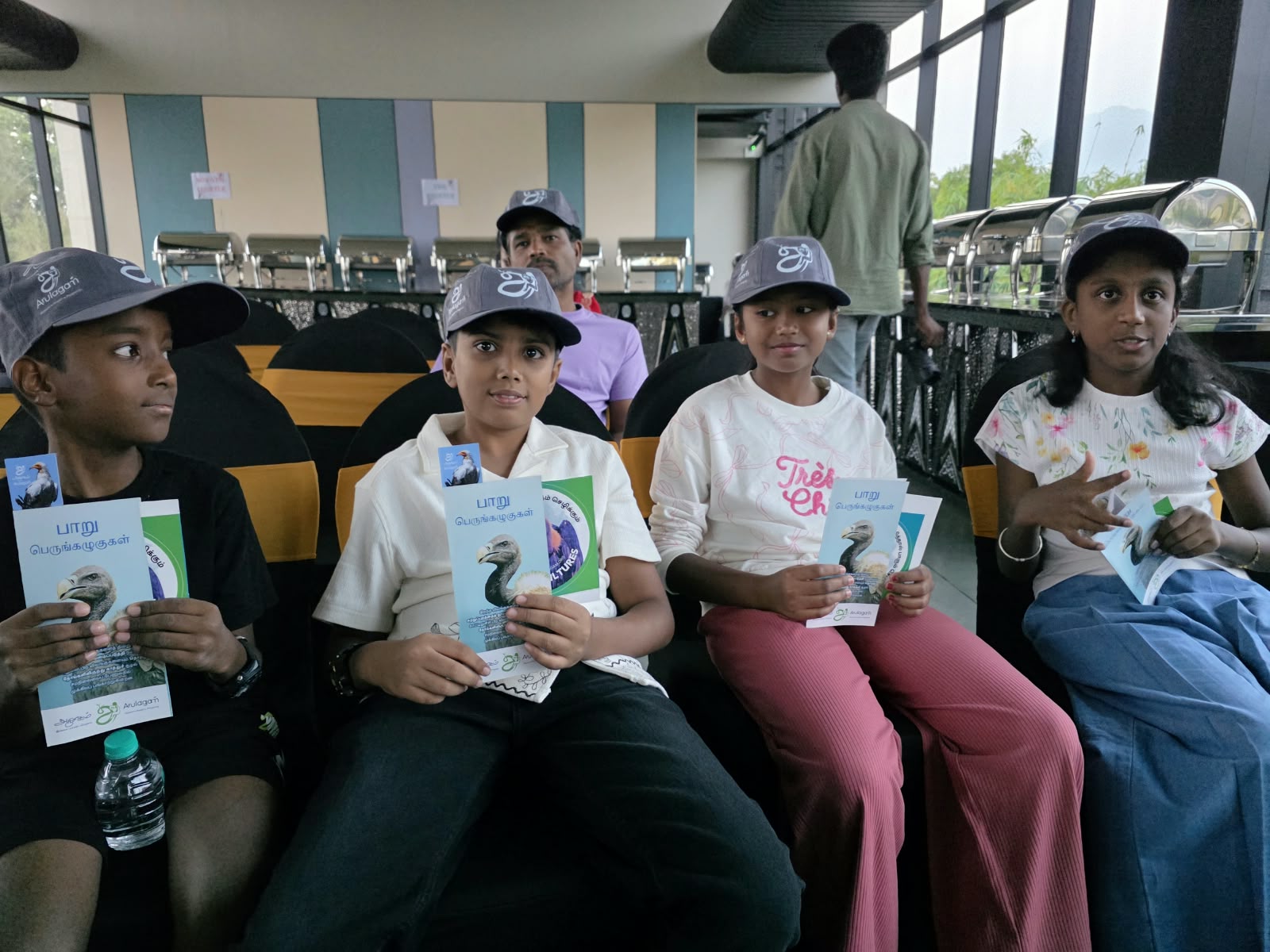
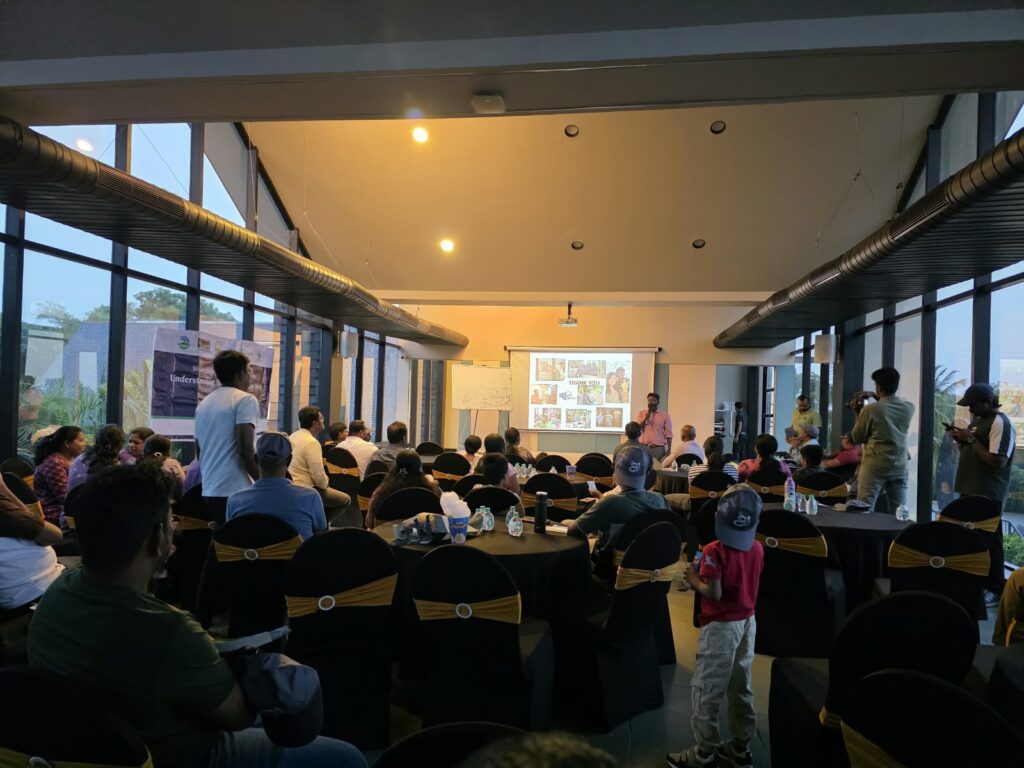
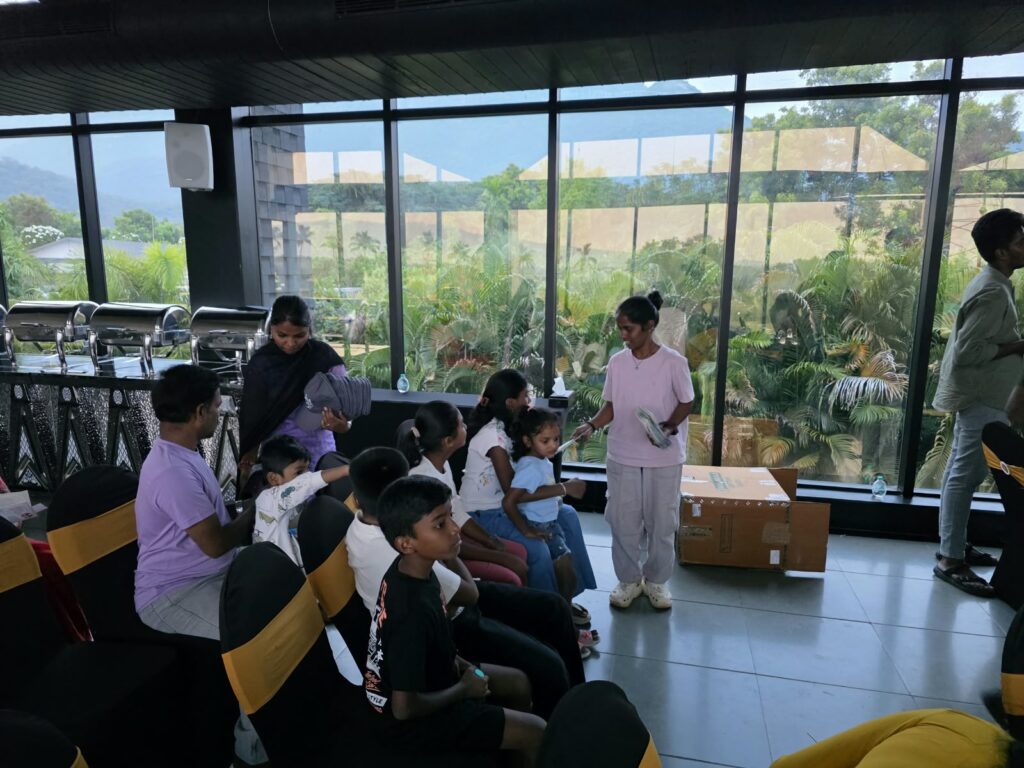
As part of Wildlife Week, Arulagam organised a special awareness programme for veterinary doctors on vulture conservation and vulture-safe veterinary practices on 02.10.2026 at Coimbatore. Sixty veterinary doctors along with their families, including 55 children, participated. The event provided an excellent opportunity to share important information on vulture conservation through the direct participation of veterinary doctors and to understand their practical experiences and challenges in veterinary treatment.
During the programme, it was explained that vultures are nature’s sanitary engineers that protect living beings by feeding on carcasses. It was further highlighted that, while the vulture population was once estimated to be in thousands in the Nilgiris Biosphere in the eighties, now it is only 390, comprising all three species.
In this context, awareness was created regarding the use of certain veterinary medicines that can be harmful to vultures, including Diclofenac, Aceclofenac, Nimesulide, Flunixin and Ketoprofen, which are pain-relieving medicines.
The veterinary doctors were also informed about the importance of using vulture-safe veterinary medicines such as Meloxicam and Tolfenamic acid, which do not cause harmful effects to vultures.
The concept of a Vulture Safe Zone was also explained. A Vulture Safe Zone is an area within a radius of 100 km that aims not only to ensure the availability of safe food for vultures but also to protect them from exposure to veterinary medicines that can be harmful to them.
The Vulture Safe Zone initiative was highlighted as an important objective of the vulture conservation efforts of the Tamil Nadu Forest Department. It was emphasized that the cooperation of veterinary doctors is essential for successfully implementing the objectives of the Vulture Safe Zone. The doctors were requested to support this initiative by avoiding the use of medicines that are harmful to vultures and by using safer alternative medicines.
During the discussion, the doctors shared their practical experiences and the challenges they face in veterinary treatment. ‘Flunixin’ effectively cures mastitis, whereas the safer drug ‘Meloxicam’ may not provide sufficient results in certain conditions. They stated that if appropriate treatment is not provided for such conditions, milk production may be affected, resulting in economic losses for livestock owners.
The doctors further stated that they had not received any clear official order specifically prohibiting the use of Flunixin. However, they mentioned that the government veterinary department had advised them to avoid using medicines that could be harmful to vultures.
Arulagam distributed vulture awareness leaflets, conservation stickers, bookmarks, and caps to veterinary doctors and children as reminders to protect vultures and wildlife.
To ensure the long-term conservation of vultures, Arulagam will continue its efforts to create awareness among veterinary doctors and promote vulture-safe veterinary practices.