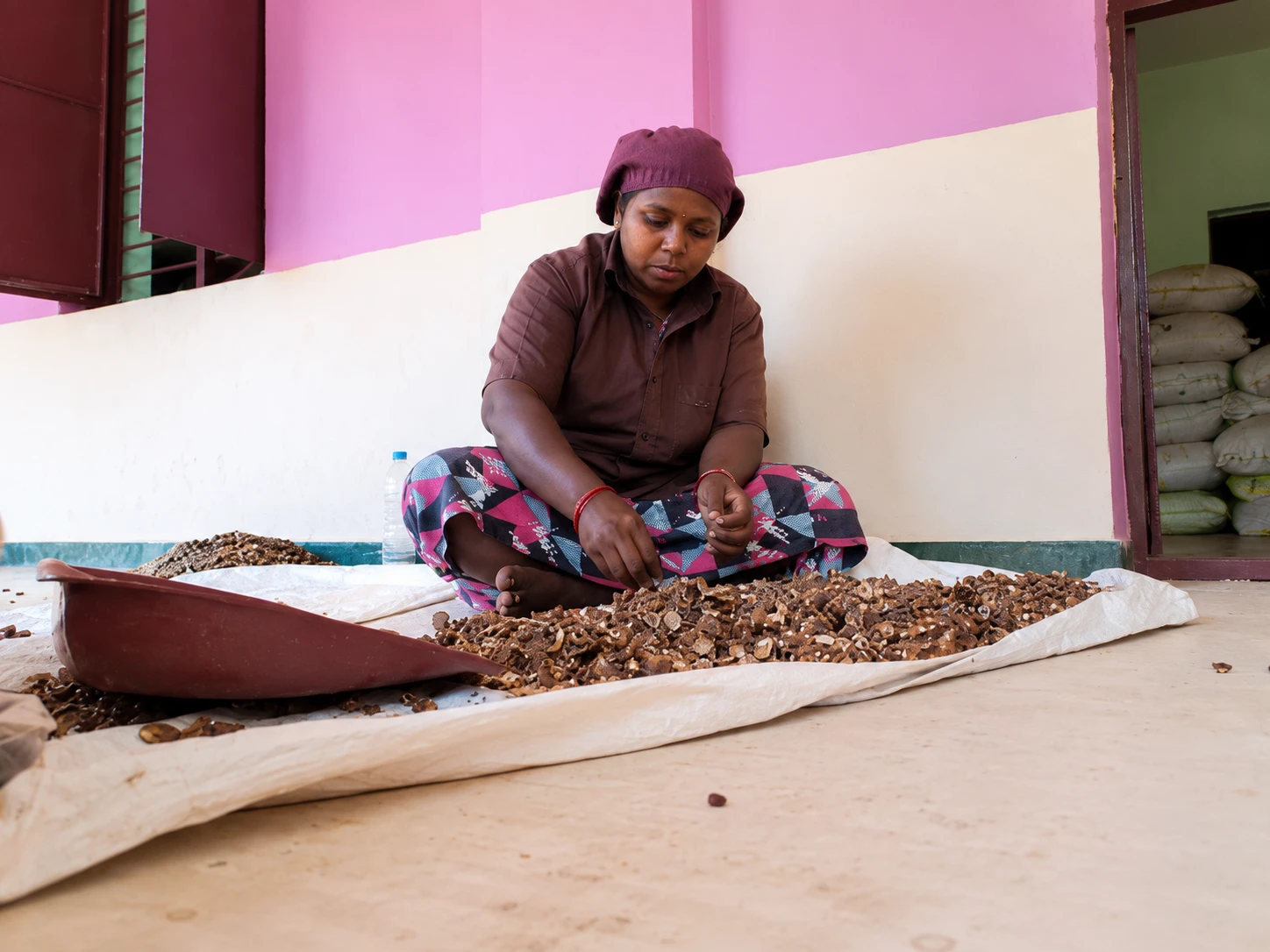
Van Dhan Vikas Kendras (VDVKs) empower tribal communities by supporting entrepreneurship and value addition of Minor Forest Produce (MFP). These community-based centers provide skill training, processing, packaging, and market linkages to help tribal gatherers increase their income, reduce dependence on middlemen, and build sustainable forest-based livelihoods.
Van Dhan Vikas Kendra (VDVK) is a key component of the Van Dhan Yojana, aimed at improving tribal livelihoods through entrepreneurship and value addition. VDVKs are community-owned centers set up in forested tribal areas to help tribal gatherers process, package, and market Minor Forest Produce (MFP). They provide skill development, working capital, and market linkages to transform gatherers into entrepreneurs. By enabling value addition at the local level, VDVKs enhance product quality and increase incomes, while reducing exploitation by middlemen. The initiative creates a sustainable value chain for forest-based enterprises, promoting self-reliance among tribal communities.
The Scheduled Tribes and Other Traditional Forest Dwellers (Recognition of Forest Rights) Act, 2006, popularly known as the Forest Rights Act (FRA), is a transformative legislation that aims to undo historical injustices faced by forest-dependent communities in India. In Tamil Nadu, the FRA is particularly significant for empowering tribal populations across districts such as Coimbatore, Erode, Theni, Nilgiris, Dharmapuri, and Tiruvannamalai.
The FRA recognizes both individual rights over forest land for habitation and cultivation, and community rights over forest resources such as minor forest produce (MFP), water bodies, traditional grazing areas, and rights to conserve and manage forest areas.
In Coimbatore and Erode districts, tribal communities such as the Irula, Kurumba, Hindu Oorali Sholiga, and Malasar have historically depended on forests for their survival. The FRA has provided legal recognition to their land and livelihood practices, protecting them from eviction and displacement, and helping them secure a more stable future.
Furthermore, by recognizing Community Forest Resource (CFR) rights, the FRA offers tribes in Coimbatore and Erode a pathway to manage and conserve their forests, aligning with traditional ecological knowledge and reinforcing sustainable practices. The FRA has also enhanced tribal participation in governance through empowered Gram Sabhas, which play a crucial role in the rights recognition process.
For Coimbatore and Erode’s tribal communities, effective implementation of FRA represents not only land security but also livelihood assurance, cultural preservation, and a more dignified role in forest conservation and rural development.
In a significant step toward strengthening tribal livelihoods in Tamil Nadu, Arulagam, a reputed organization with experience in tribal welfare and biodiversity conservation, has been empaneled by the Tribal Welfare Directorate of Tamil Nadu as the Mentoring Agency for the implementation of the Van Dhan Vikas Kendra (VDVK) project in Coimbatore district.
As the mentoring agency, Arulagam is responsible for facilitating the end-to-end implementation of the VDVK scheme, including community mobilization, capacity building, infrastructure development, and establishing market linkages for value-added forest produce. The organization will provide continuous handholding support to tribal producer groups, ensuring that the objectives of the VDVK initiative—enhancing income through value addition of Minor Forest Produce (MFP)—are effectively realized.
The project is being implemented under the direct guidance and supervision of Mr. Annadhurai, IAS, whose proactive leadership and vision are playing a key role in shaping the success of the initiative in Coimbatore. His commitment to tribal empowerment and sustainable development is reflected in the structured implementation and real-time monitoring of the project.
As of now, a total of 584 tribal members have been enlisted under the VDVK project from the blocks of Karamadai, Periyanayakampalayam, and Thondamuthur. These members, drawn from forest fringe villages, are being organized into self-help groups and trained in various aspects of tamarind collection, processing, packaging, and marketing.
| S No. | District | Block | Name of VDVK | Total Beneficiaries |
|---|---|---|---|---|
| 1. | Coimbatore | Nellidhurai VDVK | 50 | |
| 2. | Karamadi | Naikenpalayam VDVK | 52 | |
| 3. | Kemmarampalayam VDVK | 58 | ||
| 4. | Marathur VDVK | 62 | ||
| 5. | Senkuttai VDVK | 52 | ||
| 6. | Palapatti MGR Nagar VDVK | 55 | ||
| 7. | Parayankombai VDVK | 50 | ||
| 8. | Tholampalayam | Kovilpathy VDVK | 52 | |
| 9. | Mavumpathy VDVK | 50 | ||
| 10. | PN Palayam | Veerapandi VDVK | 103 | |
| Total | 3 | 10 | 584 |
The initiative aims to transform traditional forest gatherers into entrepreneurs, promoting self-reliance and reducing exploitation by middlemen. Through modernized processing units and structured value chains, the VDVK project in Coimbatore district is set to become a model for forest-based livelihood development in Tamil Nadu.