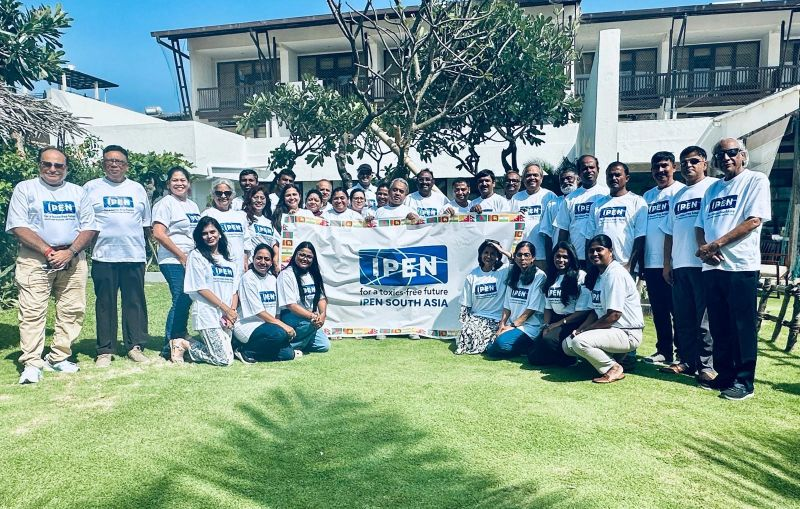
IPEN South Asia Regional Meeting in Colombo- 2 to 4 Dec 2025
The South Asian regional meeting for the General Assembly members of the International Pollution Elimination Network (IPEN) was held from December 2nd to 4th in Colombo, the capital of Sri Lanka. Just two days before the scheduled meeting, Sri Lanka was severely impacted by a devastating storm that caused widespread damage across the country.
Travel Challenges and Airline Negligence
The journey was fraught with difficulties. After reaching Chennai and completing immigration, we were kept waiting to board the flight to Sri Lanka. However, due to heavy downpours, the flight was cancelled as landing was deemed impossible. This significantly affected passengers traveling to Colombo for connecting flights. The airline staff appeared indifferent and provided negligent responses to the passengers' plight. Shortly thereafter, IndiGo airlines also faced a major crisis. Although there was significant doubt about whether the event would proceed, the organizers eventually called us, stating that the situation had stabilized.
Key Environmental Concerns Discussed
During the meeting, various environmental concern group from across South Asia highlighted critical ecological threats that often go unnoticed:
- Forever Chemicals (PFAS): Significant attention was drawn to Per- and Polyfluoroalkyl Substances (PFAS), known as "forever chemicals," and their impact in Bangladesh. It was noted that this is not just a problem for Bangladesh but is also severe in India, particularly in regions involved in ready-made garment production.
- Pesticides: The impact of chemical pesticides on Sri Lanka’s environment was a major point of discussion, emphasizing the need for stricter regulations.
- Phthalates (Plastic Softeners): Concerns were raised regarding Phthalates, chemicals used to make plastics soft and durable. These substances act as endocrine disruptors, interfering with natural hormones. Participants highlighted that their presence in diapers is particularly alarming, as it is linked to changes in children's learning abilities.
- Antimicrobial Resistance (AMR): The global threat of increasing antimicrobial resistance in humans—caused by the overuse of medications and drugs administered to livestock—was discussed. A plea was made for governments to wake up and take immediate action against this looming health crisis.
- Lead Poisoning: The dangers of lead were also addressed. Arulagam (the organization) has previously conducted fieldwork on the risks posed by paints with high lead content. It was noted that lead is found not only in paints but also in some traditional medicines, which often escapes public scrutiny. I had the opportunity to share my perspectives on this issue, and Arulagam plans to focus more on lead-related advocacy in the future.
Conclusion
The three-day event provided new perspectives and clearly illustrated the upcoming environmental challenges and risks. It served as a vital platform for regional collaboration toward a toxic-free future. Our group work led to several key outcomes, including:
- Clear South Asia priorities and focus areas for the coming year
- Strengthened cross-country collaboration and commitment to joint action
- Renewed momentum for evidence generation, policy engagement, and community outreach
- A shared vision for a safer and toxics-free South Asia
The event was well organised by Toxics Link in association with Centre for Environmental Justice.