Arulagam
Vulture Conservation
Legendary poet ‘Subramania Bharathi’s and Vulture
On the eve of the Centenary death anniversary of legendary poet and freedom fighter Subramania Bharathi, ‘Arulagam’ organisation commemorate his memory by linking with vulture conservation
Poet Bharathiar was not only raised the voice for the nation but also for the nature, universe, the birds, mountains…..etc..,
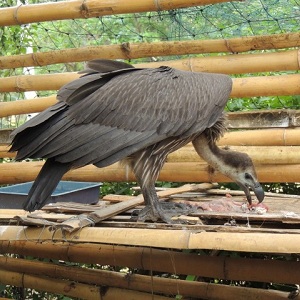
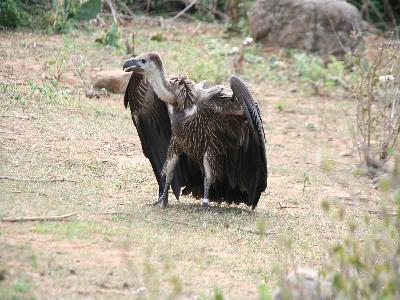
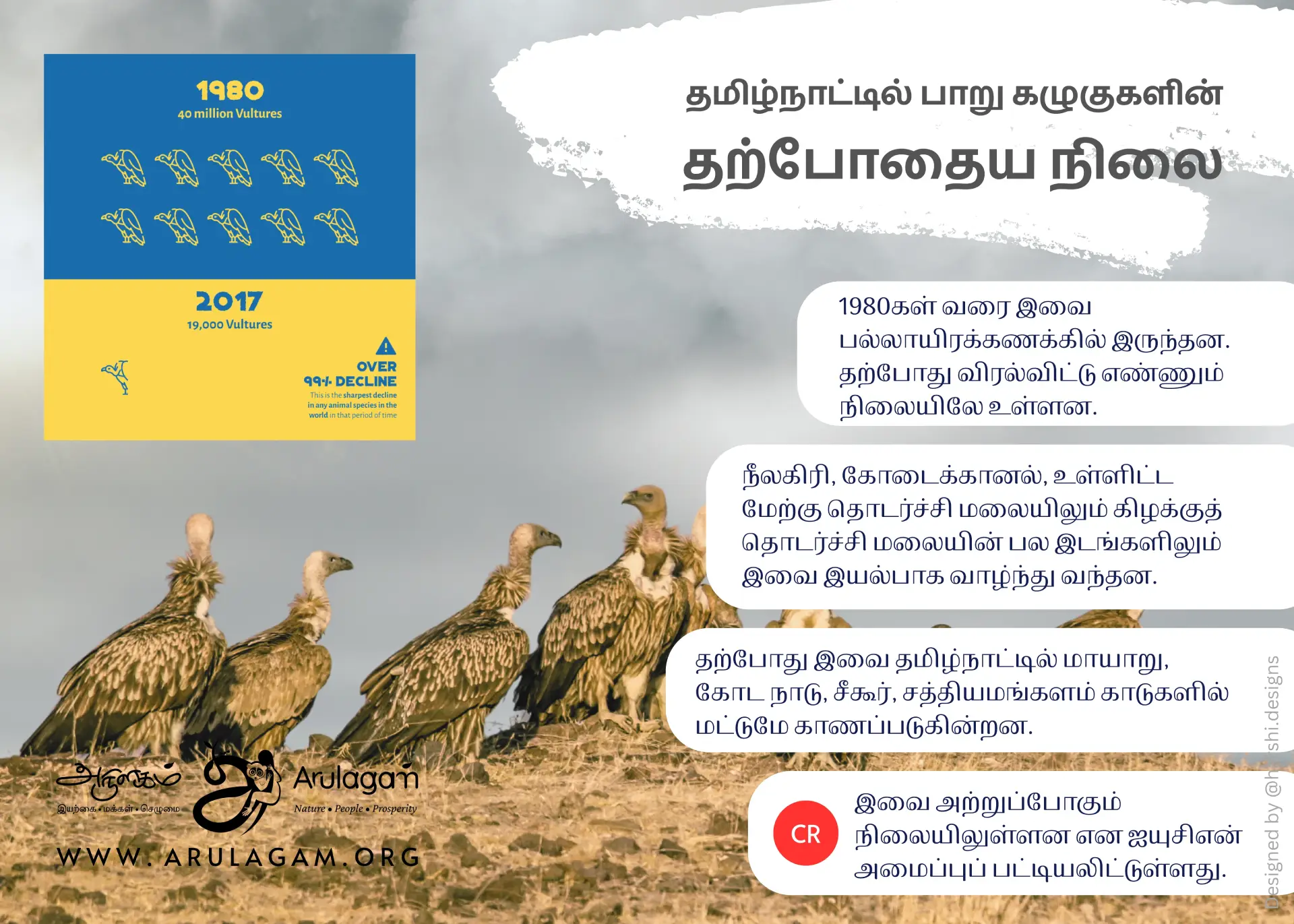
When poet Subramania Bharathi wrote a poem (“Muppadhu Kodi Mugamudaiyal…,) in 1920’s, India had 300 million people and the number of vultures at that time in Indian landscape totalled more than 4 million. Just less than a hundred years later, our human population raced up to 1.3 billion. And the vultures?
They are barely surviving, just a thousand of them!.
To highlight the plight of a vultures, and to observe the International Vulture Awareness Day, 'Arulagam' utilised that opportunity and conducted a unique programme, titled, ‘Poet Bharathi and Vulture’ on the centenary death anniversary.
An exhibition was also organised by Department of Museum, Government of Tamil Nadu at Udhagamadalam, Tamil Nadu on September, 11, 2021. Some of the rare portrait of Poet Bharathi was displayed.’Arulagam', joined hands with the museum and released the audio, ‘Voice of the Vultures’ in nine different languages viz, Tamil, English, Hindi, Malayalam, Kannada, Telugu, German, Swedish and Spanish. It was well received by the audience.
Please allow us to quote some of the lines from Bharathi’s poem
"Kaakai Kuruvi Engal Jaadhi
Neel Kadalum Malaiyum engal koottam"
(The Birds are our clans, the mountains and the oceans are our partners)
On the eve of the Centenary death anniversary of legendary poet and freedom fighter Subramania Bharathi, ‘Arulagam’ organisation commemorate his memory by linking with vulture conservation
Poet Bharathiar was not only raised the voice for the nation but also for the nature, universe, the birds, mountains…..etc..,
When poet Subramania Bharathi wrote a poem (“Muppadhu Kodi Mugamudaiyal…,) in 1920’s, India had 300 million people and the number of vultures at that time in Indian landscape totalled more than 4 million. Just less than a hundred years later, our human population raced up to 1.3 billion. And the vultures?
They are barely surviving, just a thousand of them!.
To highlight the plight of a vultures, and to observe the International Vulture Awareness Day, 'Arulagam' utilised that opportunity and conducted a unique programme, titled, ‘Poet Bharathi and Vulture’ on the centenary death anniversary.
An exhibition was also organised by Department of Museum, Government of Tamil Nadu at Udhagamadalam, Tamil Nadu on September, 11, 2021. Some of the rare portrait of Poet Bharathi was displayed.’Arulagam', joined hands with the museum and released the audio, ‘Voice of the Vultures’ in nine different languages viz, Tamil, English, Hindi, Malayalam, Kannada, Telugu, German, Swedish and Spanish. It was well received by the audience.
Please allow us to quote some of the lines from Bharathi’s poem
"Kaakai Kuruvi Engal Jaadhi
Neel Kadalum Malaiyum engal koottam"
(The Birds are our clans, the mountains and the oceans are our partners)
‘Vanil parakkum pullellam naan’
“I am the birds in the sky’.
‘Vittu Viduthalai aki nirpai anthac chittu kurviyaipola’
Stay liberated – Like this little sparrow
Above lines are just an example. If he were alive now, he would have written the plight of vultures too.
Arulagam team (Organiser of the event) expressed that, by observing his death anniversary, the message on vulture conservation also got attention among the general audience. More over, Vultures are often described in negative connotation by cartoonist and fiction writers. To break that myth on vulture, we used to conduct this kind of programmes.
The programme was well received by the student community and common public. The exhibition was declared open by women group members, journalist Ms. Shantha and tribal women Ms. Thayammal.
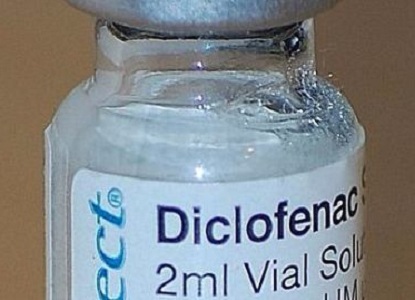
This program was hosted by Mr. M. Murugavel (Museum Curator) Udhagamandalam. Mr. S. Bharathidasan Secretary of ‘Arulagam’ gave a welcome note to the public and alert the harmful effects of veterinary drugs to the vultures. Dr. B. Ramakrishnan (Assistant Professor, Department of Wildlife Biology) Government Arts College, Udagamandalam gave a brief speech on different species of vultures found in Niligiri Biosphere Reserve. Mr. H. Byju (Ecologist) shared his experience on vultures based on his book “Valley of hope – Moyar and Vulture” to the public.
Compensation for the cattle kill was also distributed on the same day among 10 beneficiaries who lost their livestock in and around Mudhumalai Tiger Reserve by wild predators. So far the compensation was given to 50 beneficiaries in within 9 months. This morotorium grant was streamlined with the help of by Mariyamma Charitable Trust, Bandipur (Karnataka) and WWF -India.
S. Bharathidasan, Secretary of 'Arulagam' said in the last nine months, 50 incidents of tiger and leopard attacks on cow and goats were reported in Bokkapuram, Siriyur, Moyar, Anaikatty, and Vazhaithottam villages in the Mudumalai Tiger Reserve (MTR). Apart from giving interim relief, our team is also helping to claim compensation from Government by voluntarily arranging 'No Objection Certificate (NOC) from the Village Administrative Officer (VAO), local Veterinarian and Forest Department.
Mr. Vidhyadaran, Assistant Conservator Forest (Retired) assurence to help them claiming on Compensation. The vote of thanks was given by Mr. S. Maniganden (Research Scholar) and Mr. J. Paul Immanuel Rajaseelan (Researcher) coordinated the program.
The digital display board with nine different language audio was developed with the support of Rufford Foundation and Van Tien Hoven Foundation. It was donated to the Government Museum by 'Bharathidasan.S, Secretary, 'Arulagam'.
Ladies and Gentlemen, Poet Bharathi for you!
Born into poverty, died in poverty but lived a rich life in poetry. Still living through it and will lever forever with it.
Poet Bharathi, who passed away in 1921, was unlike any the world had seen before, or after.
The Keats, Byrons and Miltons of the world were torch bearers for poetry from lands of riches. Riches that enabled them to dream about love, pain, lost paradises and so on.
Bharathi was the voice of a Nation whose soul was enslaved for hundreds of years and not yet completely free even now.
His voice was the voice of The Universe, the joy, the suffering, the gods, the common folks, the hope, all embracing force called life!
His empathy for poor became
"Thani Oruvanukku Unavillai Enil Jagathai Azhipppom"
(What is the value of the Universe if it cannot feed a hungry stomach?)
His cherishment of Valour became
"Akkini Kunjondru Kanden. Adhai Aangor Kaatidai Pondhinil Vaithen. Vendhu Thanindhadhu Kaadu. Thazhal Veerathil kunjendrum moopendrum undo?"
(Even a spark can burn down a forest; what difference it makes between a spark and a torch?)
His anguish on human pride and prejudice became
"Nenju Porukkudhillaiye Indha Nilai Ketta Manidharai Ninaithuvittaal"
(The heart breaks at the very thought of the ineptitude of people whose lives are filled with myths and superstitions)
His love of unity bacame
"Muppadhu Kodi Mugamudaiyal
Seppu Mozhi Pathinettudaiyaal
Enil Sindhani ondrudaiyaal"
(Though our land is of diverse languages and cultures, our thoughts are singular).
The poet who lived like the king of kings in his poetic riches, died a pauper but the riches he left for us have lit up our hearts and minds with the power of Hope, the power of Positivity and the power of Earnest desire...long after the Sun had set in the Empire that enslaved his Nation.
These lights shall never dim.
Liberation – Little Sparrow
(Original poem by Bharaithyar)
Stay liberated – Like this little sparrow
In eight directions, it flies and roams, Into the air, it ascends; swims rapidly through, In measureless abundance lay, The sky awash in light, is the nectar it savors
Converse felicity with the she-sparrow, in exultation; Free of affliction, build a nest Nurture the hatchling that emerges from the egg and rejoice, First feed the youngling, engulf in love
From the yards of homes and open fields, Gather the grains that are found, bring home and partake; In other times, tell stories and slumber; afterward Long before dawn, sing a song and wake up.
“I am the birds in the sky’.
‘Vittu Viduthalai aki nirpai anthac chittu kurviyaipola’
Stay liberated – Like this little sparrow
Above lines are just an example. If he were alive now, he would have written the plight of vultures too.
Arulagam team (Organiser of the event) expressed that, by observing his death anniversary, the message on vulture conservation also got attention among the general audience. More over, Vultures are often described in negative connotation by cartoonist and fiction writers. To break that myth on vulture, we used to conduct this kind of programmes.
The programme was well received by the student community and common public. The exhibition was declared open by women group members, journalist Ms. Shantha and tribal women Ms. Thayammal.
This program was hosted by Mr. M. Murugavel (Museum Curator) Udhagamandalam. Mr. S. Bharathidasan Secretary of ‘Arulagam’ gave a welcome note to the public and alert the harmful effects of veterinary drugs to the vultures. Dr. B. Ramakrishnan (Assistant Professor, Department of Wildlife Biology) Government Arts College, Udagamandalam gave a brief speech on different species of vultures found in Niligiri Biosphere Reserve. Mr. H. Byju (Ecologist) shared his experience on vultures based on his book “Valley of hope – Moyar and Vulture” to the public.
Compensation for the cattle kill was also distributed on the same day among 10 beneficiaries who lost their livestock in and around Mudhumalai Tiger Reserve by wild predators. So far the compensation was given to 50 beneficiaries in within 9 months. This morotorium grant was streamlined with the help of by Mariyamma Charitable Trust, Bandipur (Karnataka) and WWF -India.
S. Bharathidasan, Secretary of 'Arulagam' said in the last nine months, 50 incidents of tiger and leopard attacks on cow and goats were reported in Bokkapuram, Siriyur, Moyar, Anaikatty, and Vazhaithottam villages in the Mudumalai Tiger Reserve (MTR). Apart from giving interim relief, our team is also helping to claim compensation from Government by voluntarily arranging 'No Objection Certificate (NOC) from the Village Administrative Officer (VAO), local Veterinarian and Forest Department.
Mr. Vidhyadaran, Assistant Conservator Forest (Retired) assurence to help them claiming on Compensation. The vote of thanks was given by Mr. S. Maniganden (Research Scholar) and Mr. J. Paul Immanuel Rajaseelan (Researcher) coordinated the program.
The digital display board with nine different language audio was developed with the support of Rufford Foundation and Van Tien Hoven Foundation. It was donated to the Government Museum by 'Bharathidasan.S, Secretary, 'Arulagam'.
Ladies and Gentlemen, Poet Bharathi for you!
Born into poverty, died in poverty but lived a rich life in poetry. Still living through it and will lever forever with it.
Poet Bharathi, who passed away in 1921, was unlike any the world had seen before, or after.
The Keats, Byrons and Miltons of the world were torch bearers for poetry from lands of riches. Riches that enabled them to dream about love, pain, lost paradises and so on.
Bharathi was the voice of a Nation whose soul was enslaved for hundreds of years and not yet completely free even now.
His voice was the voice of The Universe, the joy, the suffering, the gods, the common folks, the hope, all embracing force called life!
His empathy for poor became
"Thani Oruvanukku Unavillai Enil Jagathai Azhipppom"
(What is the value of the Universe if it cannot feed a hungry stomach?)
His cherishment of Valour became
"Akkini Kunjondru Kanden. Adhai Aangor Kaatidai Pondhinil Vaithen. Vendhu Thanindhadhu Kaadu. Thazhal Veerathil kunjendrum moopendrum undo?"
(Even a spark can burn down a forest; what difference it makes between a spark and a torch?)
His anguish on human pride and prejudice became
"Nenju Porukkudhillaiye Indha Nilai Ketta Manidharai Ninaithuvittaal"
(The heart breaks at the very thought of the ineptitude of people whose lives are filled with myths and superstitions)
His love of unity bacame
"Muppadhu Kodi Mugamudaiyal
Seppu Mozhi Pathinettudaiyaal
Enil Sindhani ondrudaiyaal"
(Though our land is of diverse languages and cultures, our thoughts are singular).
The poet who lived like the king of kings in his poetic riches, died a pauper but the riches he left for us have lit up our hearts and minds with the power of Hope, the power of Positivity and the power of Earnest desire...long after the Sun had set in the Empire that enslaved his Nation.
These lights shall never dim.
Liberation – Little Sparrow
(Original poem by Bharaithyar)
Stay liberated – Like this little sparrow
In eight directions, it flies and roams, Into the air, it ascends; swims rapidly through, In measureless abundance lay, The sky awash in light, is the nectar it savors
Converse felicity with the she-sparrow, in exultation; Free of affliction, build a nest Nurture the hatchling that emerges from the egg and rejoice, First feed the youngling, engulf in love
From the yards of homes and open fields, Gather the grains that are found, bring home and partake; In other times, tell stories and slumber; afterward Long before dawn, sing a song and wake up.
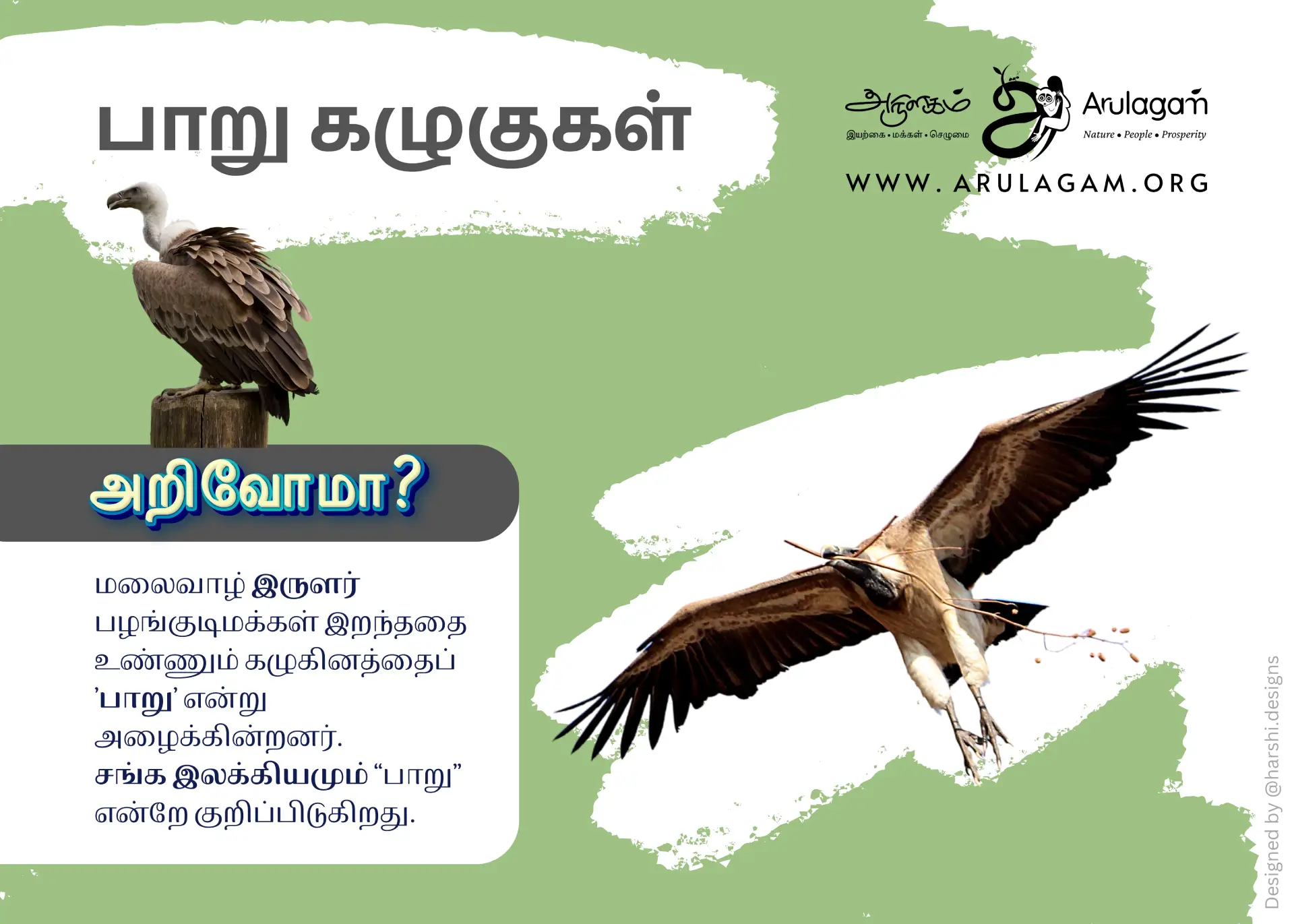
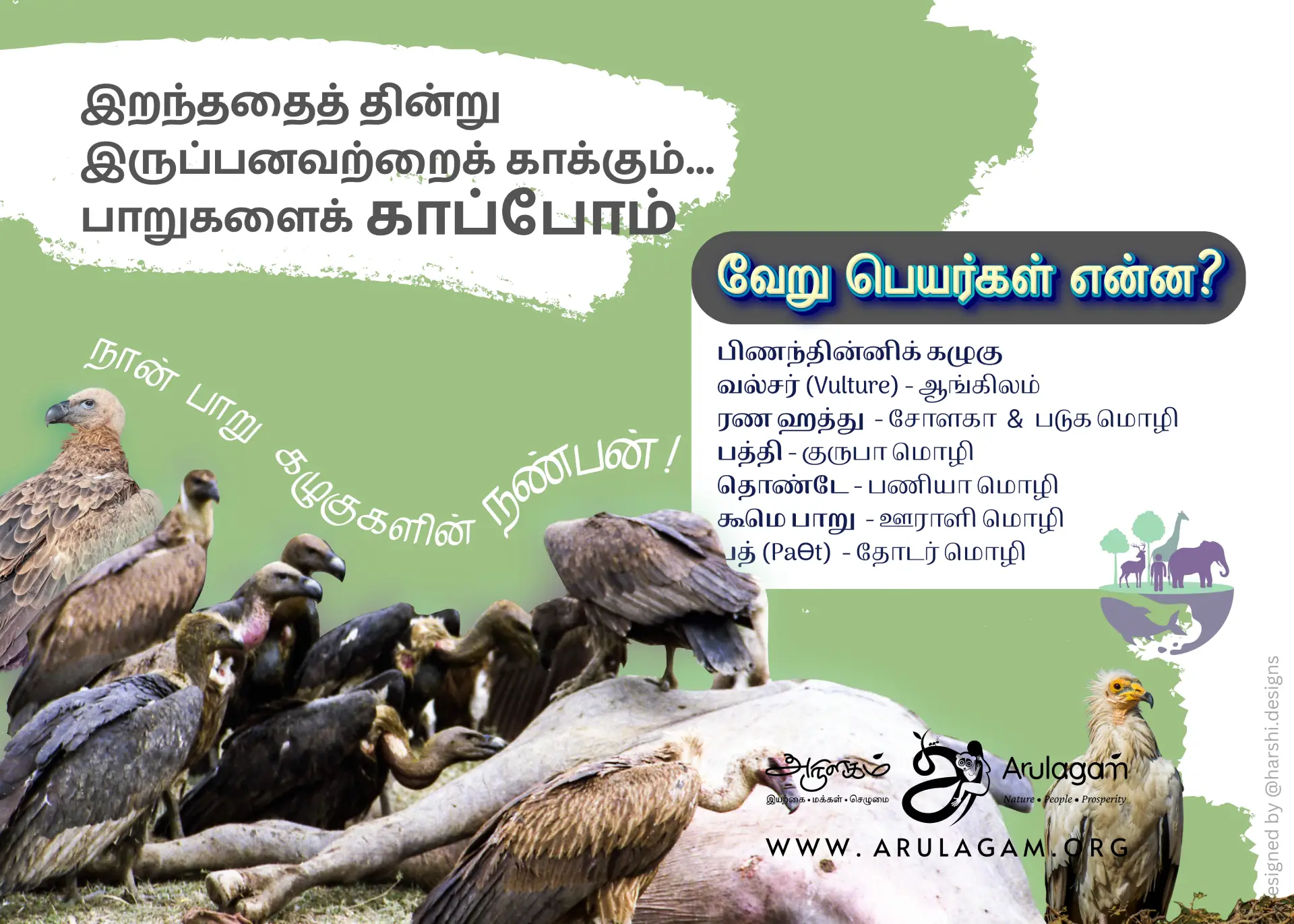
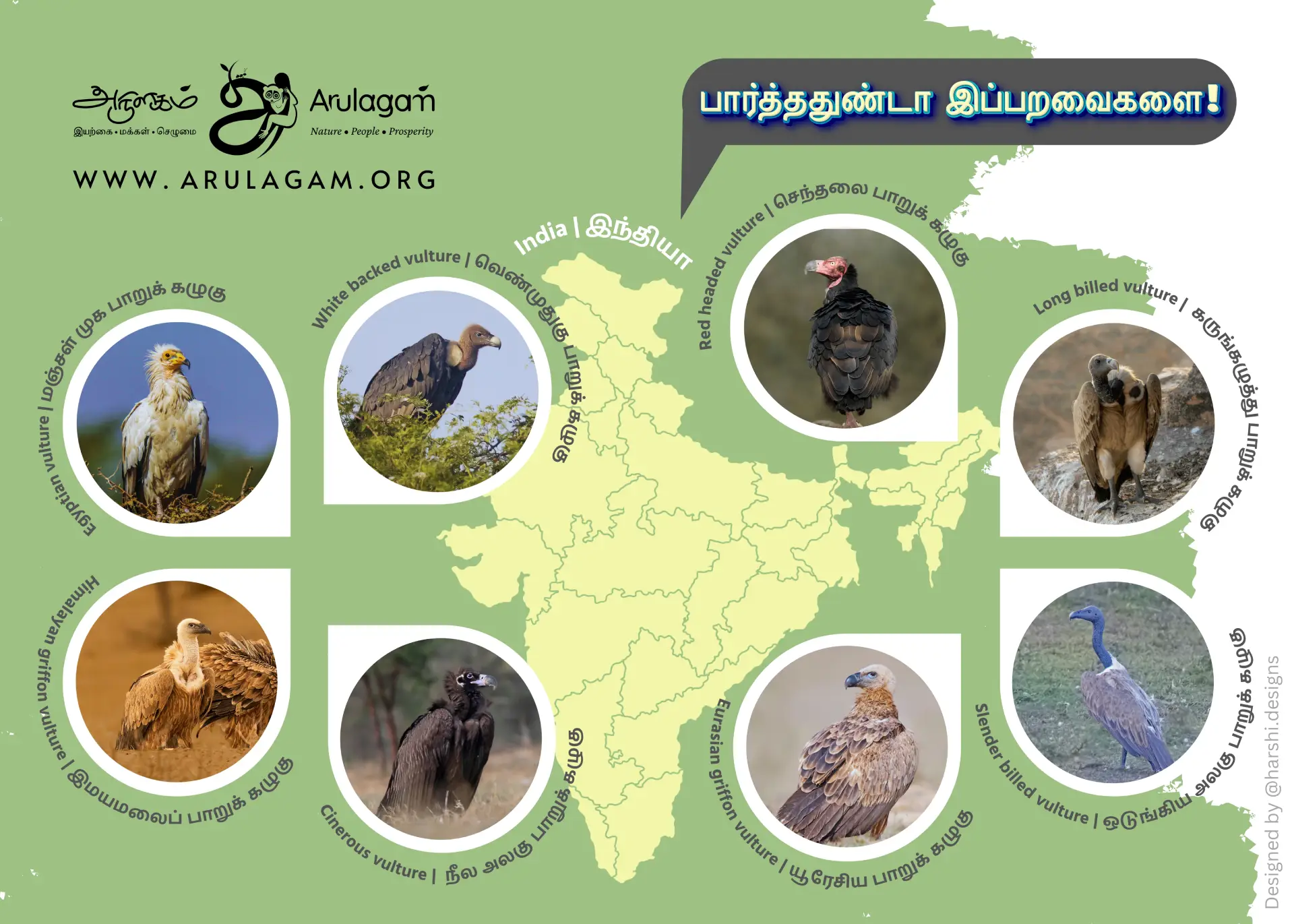
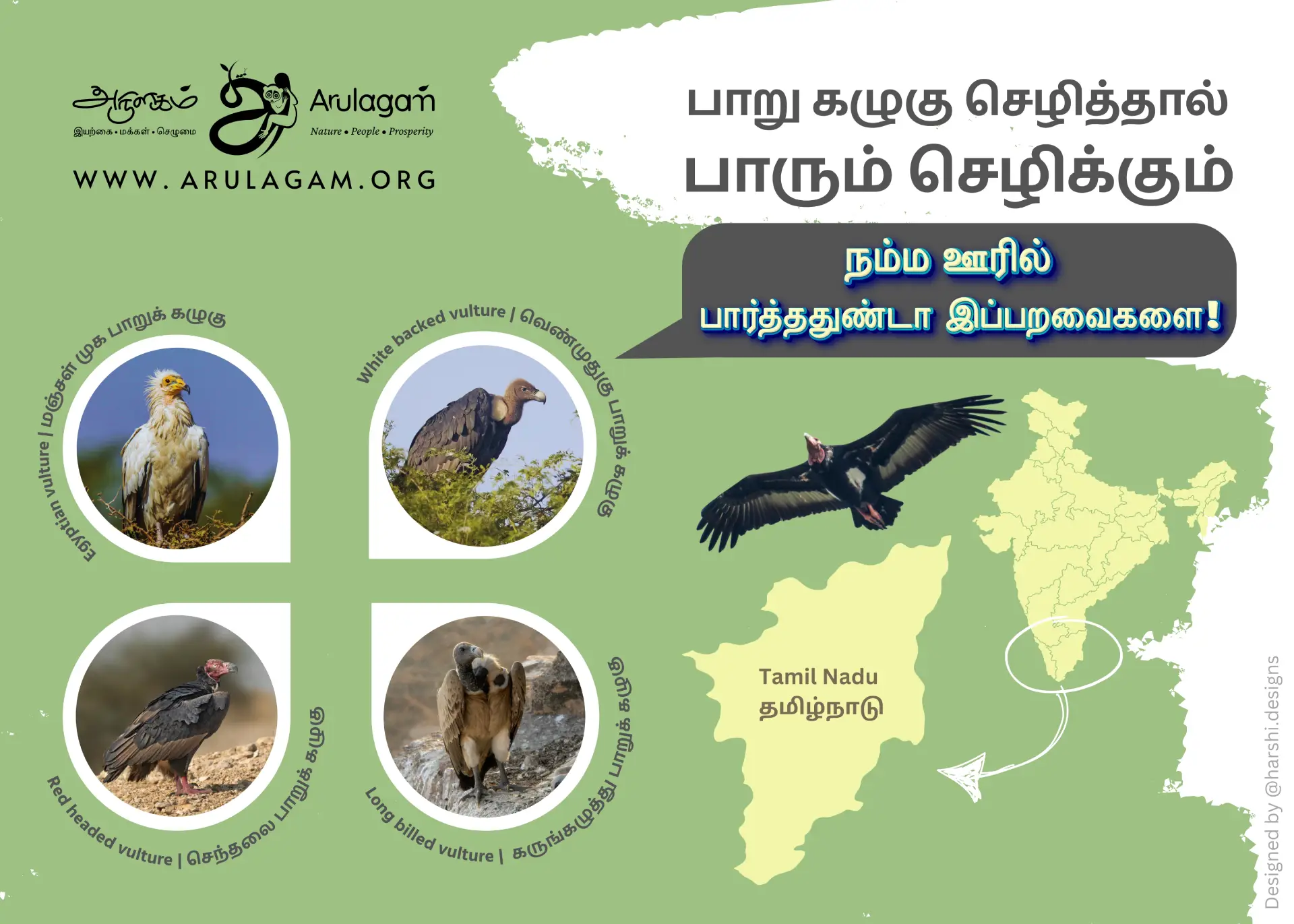
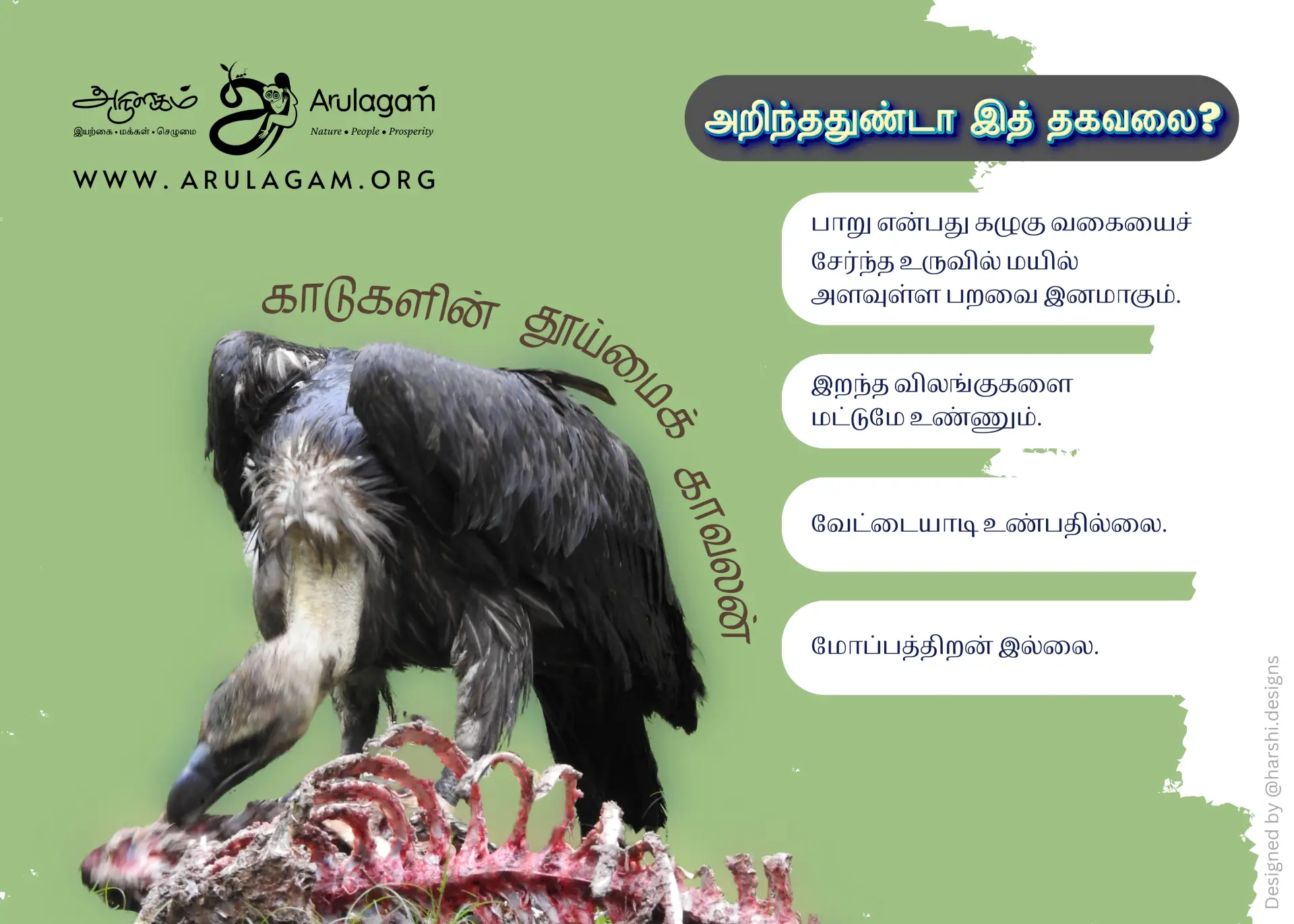
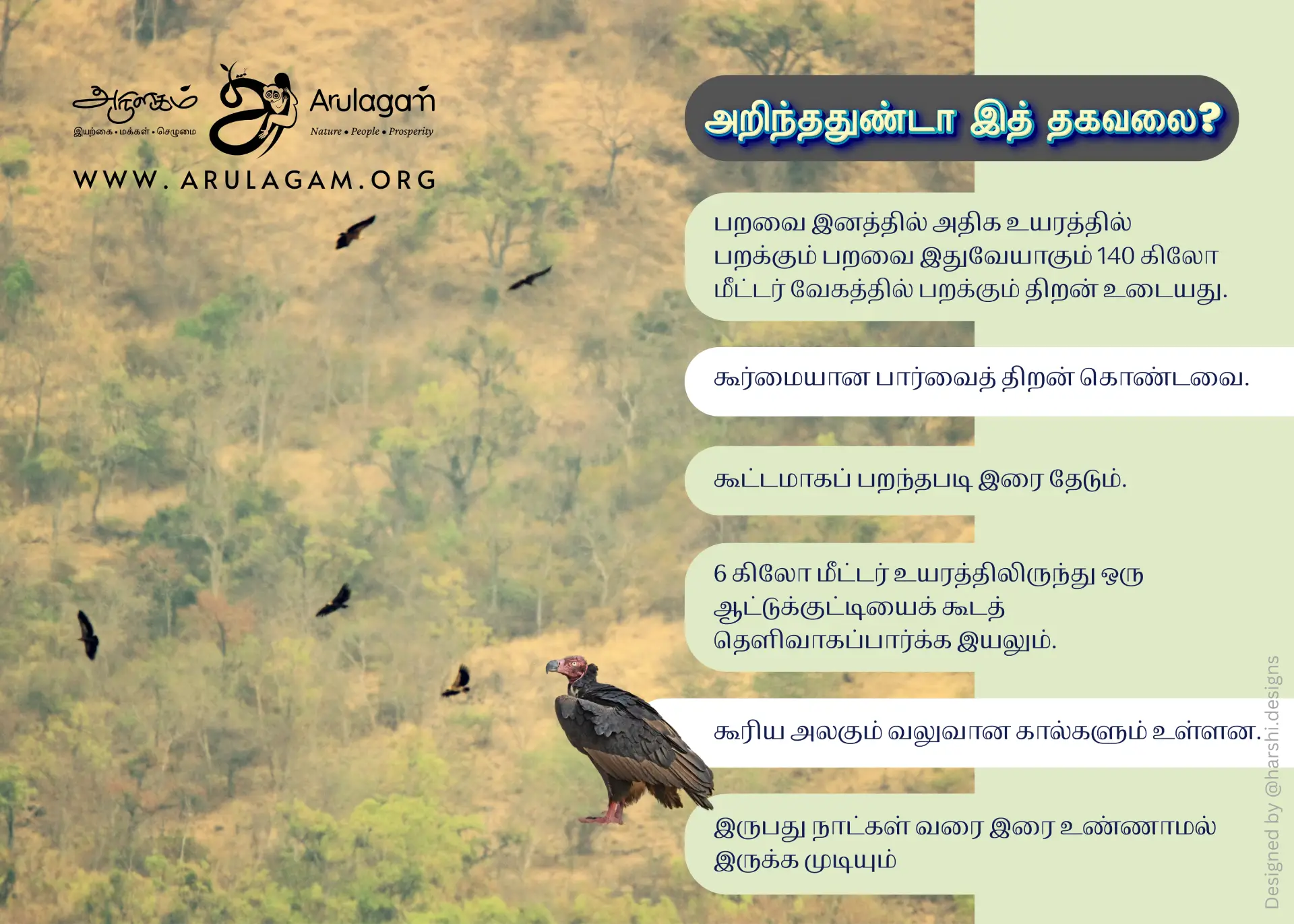
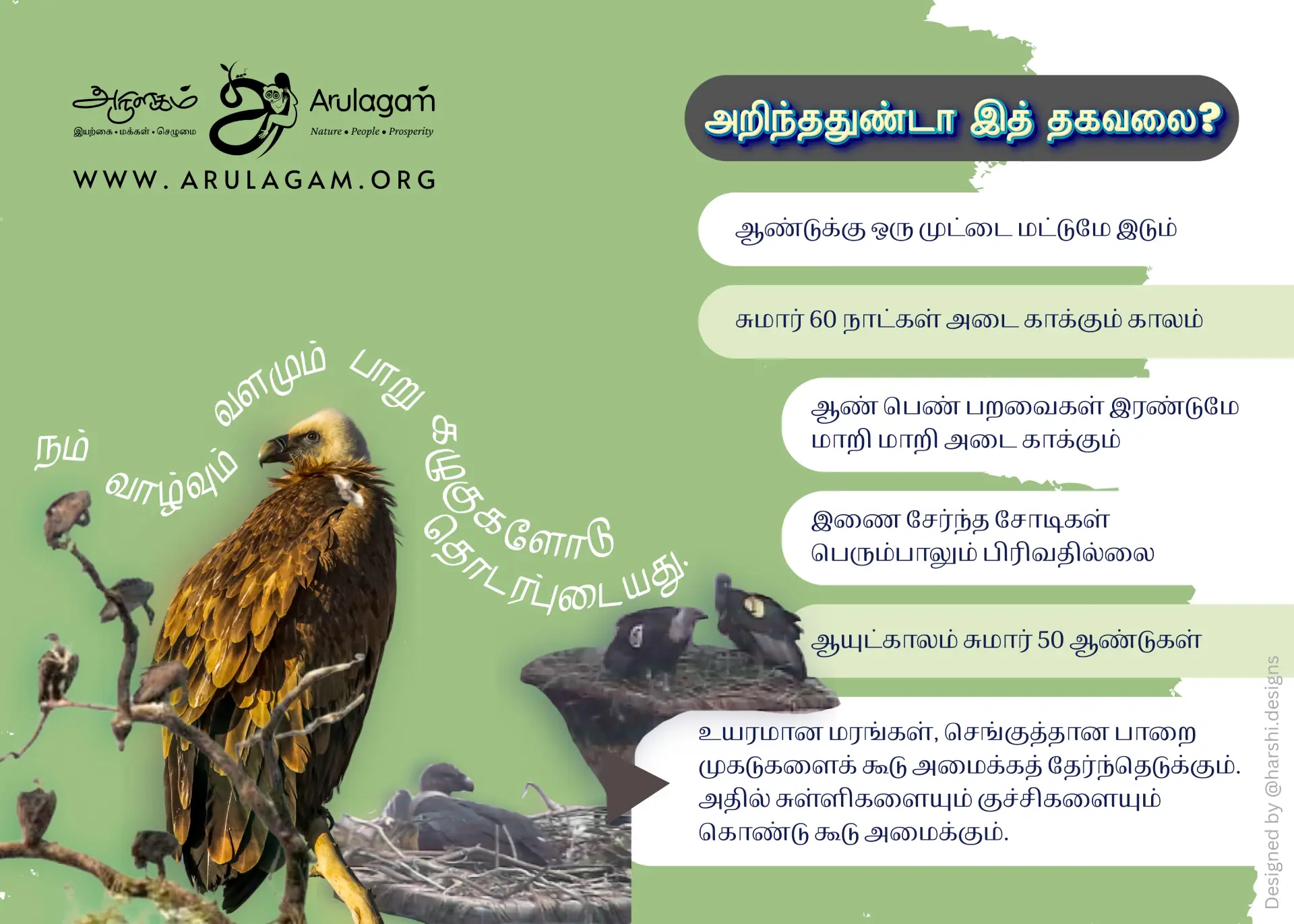
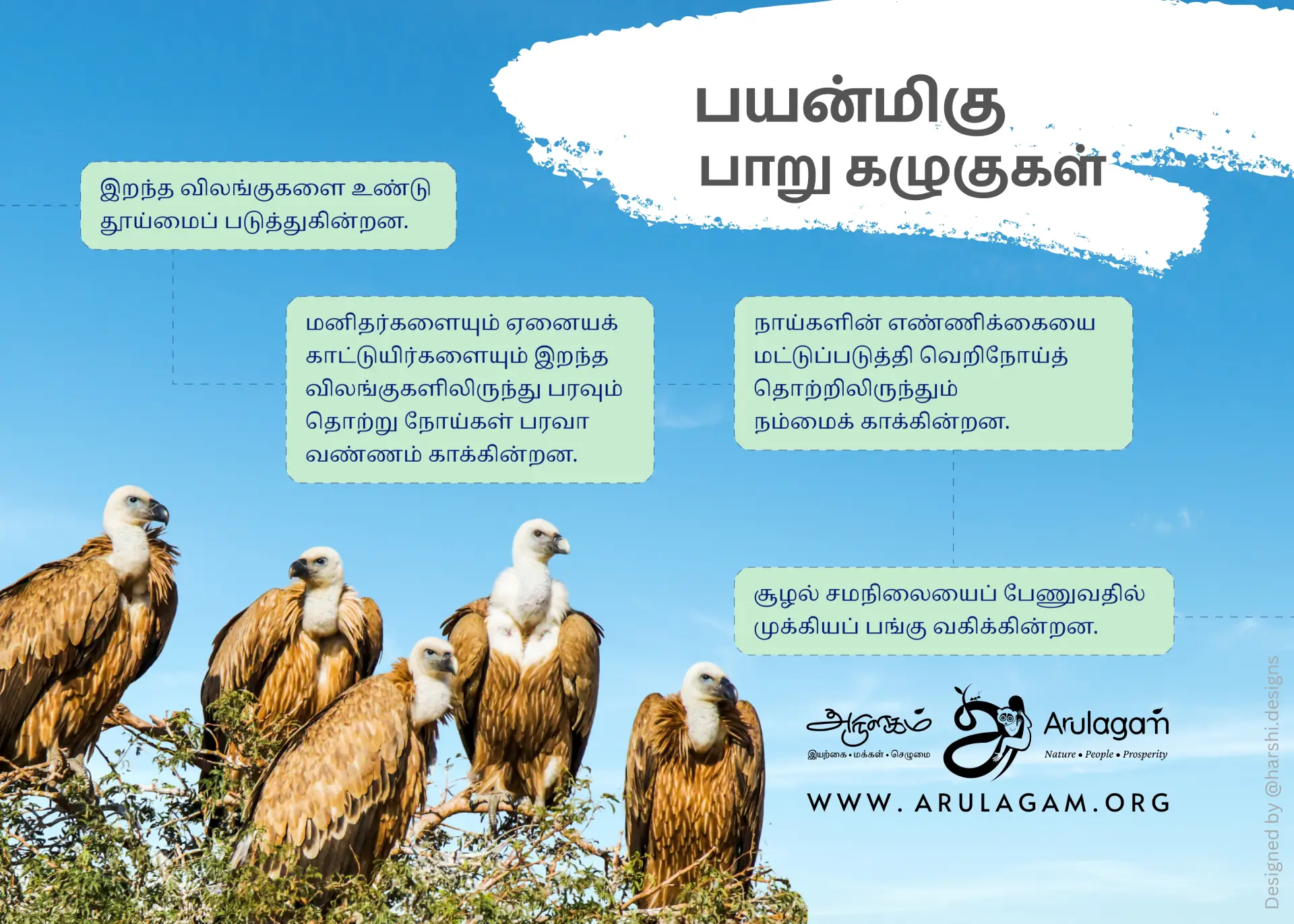
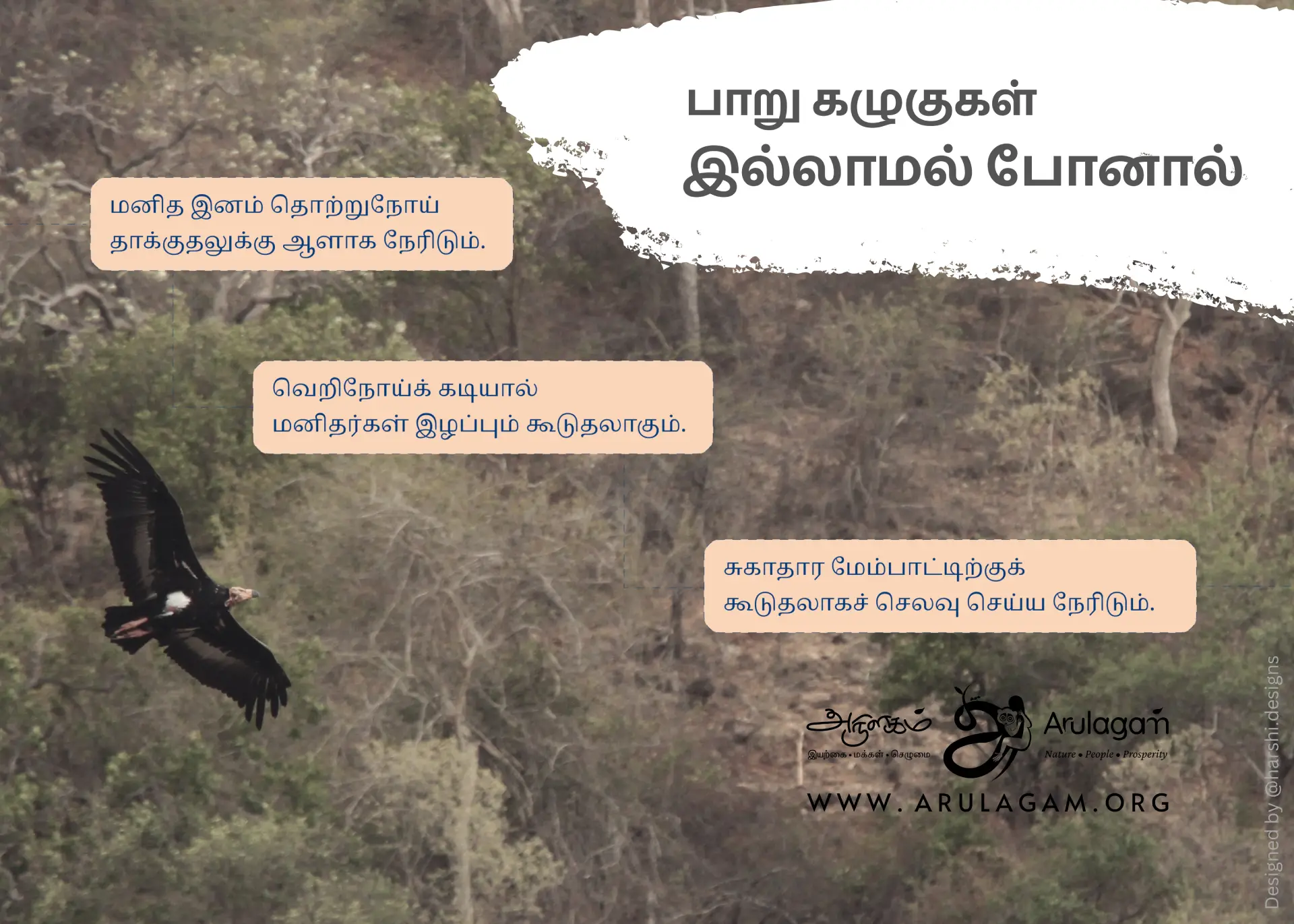
The sixth of September every year marks a very important milestone in our relationship with vultures- the most misunderstood group of birds in the world.
IVAD came into being in 2009, when individual organizations from South Africa and England came together to make the day a global event. It is now religiously
observed every year by conservation organizations like us-we here at Arulagam use this opportunity every year to preach the word on the importance of vultures to us,
to our ecosystem and ultimately, to the rich biodiversity on our planet earth.
This year, the Vultures have been given a voice and they talk to us about why they need our help! Listen on:
IVAD came into being in 2009, when individual organizations from South Africa and England came together to make the day a global event. It is now religiously
observed every year by conservation organizations like us-we here at Arulagam use this opportunity every year to preach the word on the importance of vultures to us,
to our ecosystem and ultimately, to the rich biodiversity on our planet earth.
This year, the Vultures have been given a voice and they talk to us about why they need our help! Listen on: