
The Van Dhan Vikas Kendra (VDVK) is a flagship livelihood initiative of the Ministry of Tribal Affairs, Government of India, implemented through the Tribal Cooperative Marketing Development Federation of India (TRIFED). The programme aims to enhance the income of tribal communities by promoting the sustainable collection, value addition, and marketing of Minor Forest Produce (MFP), ensuring better prices and improved livelihoods.
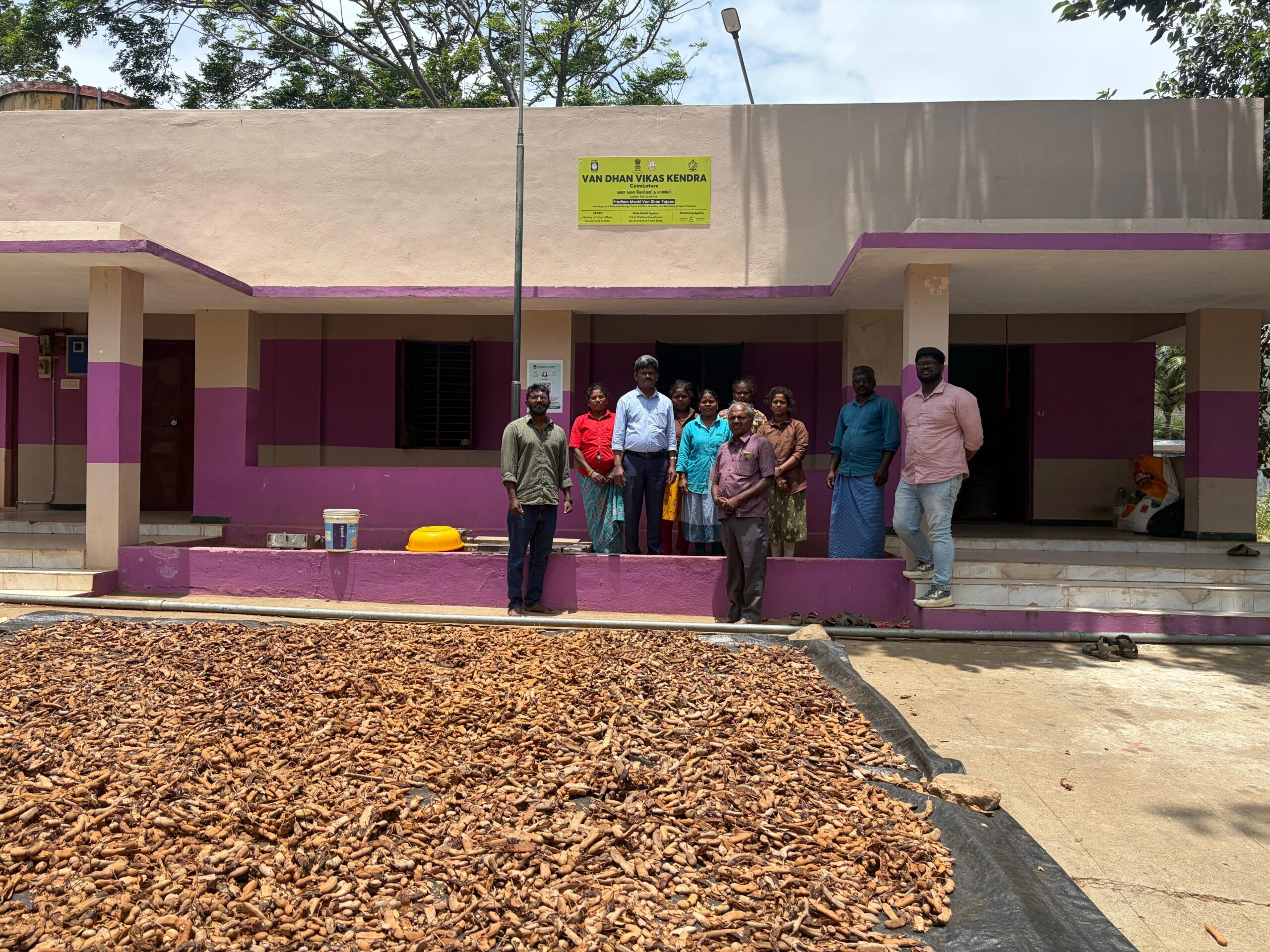
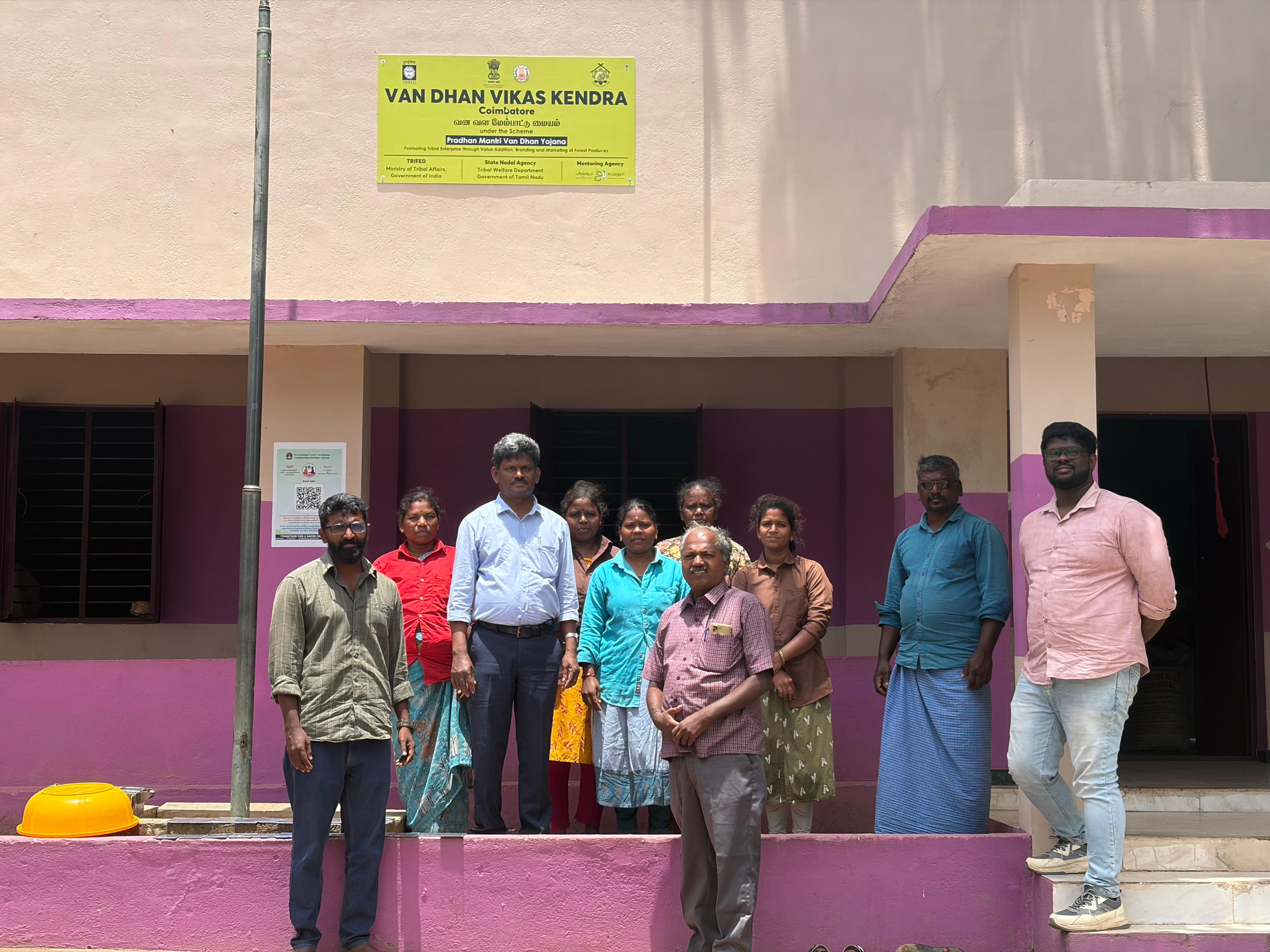
Mr. S.P. Sudalai, Regional Manager, TRIFED, visited the Coimbatore Van Dhan Vikas Kendra (VDVK) tamarind processing unit located at Thuvaipathy Tribal Village near Anaikatti. He was accompanied by Ms. Krithika and Mr. Jayapal, Commercial Executives from TRIFED, who participated in the monitoring visit.
During the visit, Mr. Sudalai appreciated the efforts of the VDVK value addition group and reviewed the entire procurement and processing system in detail. Mr. Amirthalingam, Treasurer of Arulagam, explained that the Tribal Welfare Department had supported the project by providing machinery worth ₹15 lakh and renovating the processing building at a cost of ₹6 lakh. He further informed the team that Arulagam had contributed approximately ₹4.5 lakh towards business operations and the procurement of raw materials.
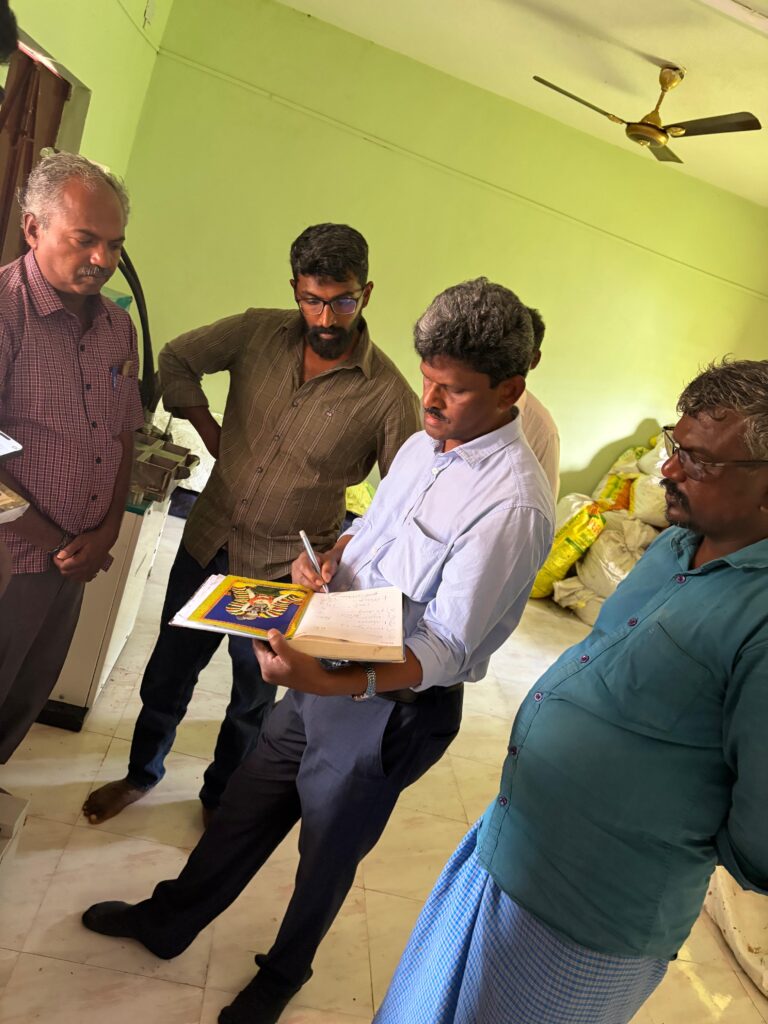
Mr. John, Project Manager, explained the community-based model adopted by the VDVK. He highlighted that tribal members collect tamarind sustainably from the forest and that every stage of the value chain—including transportation, logistics, loading, unloading, and processing—is carried out by tribal households. He added that the premium price paid for tamarind has significantly improved the livelihoods of the participating families, and the tribal members expressed their satisfaction with the initiative.
The women workers at the processing unit demonstrated each stage of the tamarind value addition process and shared their experiences with the visiting officials. Mr. Sudalai showed keen interest in interacting with the workers and understanding the positive impact of the programme on their livelihoods.
During the review, Mr. Sudalai also explained the methodology for fixing the selling price of the processed tamarind using a live cost calculation. Based on the analysis, he recommended a selling price of ₹190 per kilogram. He further instructed Mr. Jayapal to initiate the empanelment process for the product and facilitate procurement orders so that the ready stock could be marketed through TRIFED.