
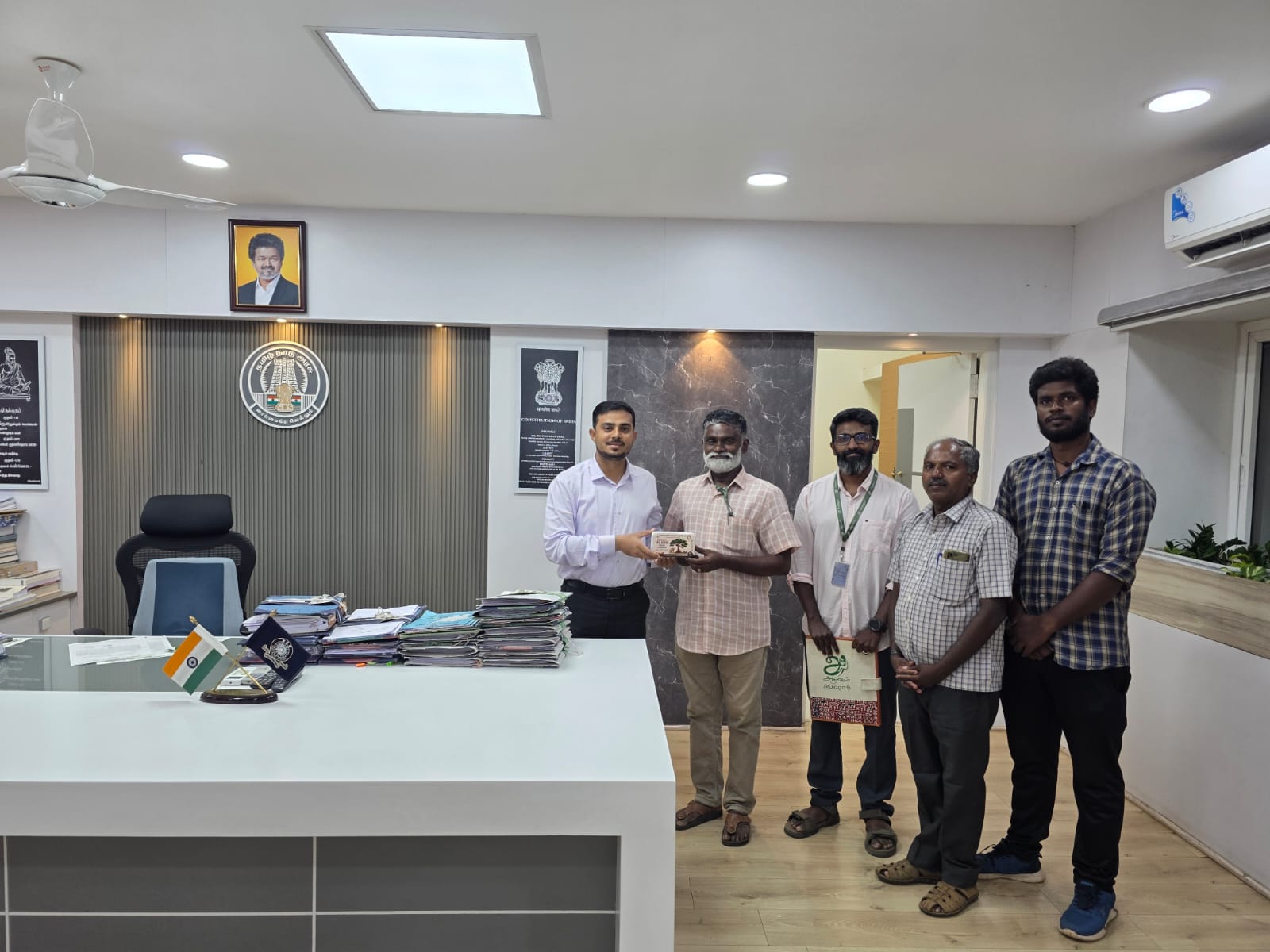
Coimbatore, June 25: A significant milestone in tribal livelihood development was achieved in Coimbatore as the first batch of value-added tamarind products processed by tribal communities under the Van Dhan Vikas Kendra (VDVK) programme was presented to Thiru. Pavankumar G. Giriyappanavar, I.A.S, district Collector, Coimbatore.
The Van Dhan Vikas Kendra (VDVK) in Coimbatore functions under the Pradhan Mantri Van Dhan Yojana (PMVDY), a flagship programme of the Ministry of Tribal Affairs. The initiative is implemented through the Directorate of Tribal Welfare, Government of Tamil Nadu, with the Tribal Cooperative Marketing Development Federation of India (TRIFED) serving as the national nodal agency.
The Coimbatore VDVK has brought together 584 registered tribal members who collect and market Minor Forest Produce (MFP) such as honey, amla, tamarind, arappu and shikakai from the forest. Among these products, tamarind has emerged as a major livelihood opportunity due to its abundance, with an estimated 2,000 tonnes available every harvesting season.
Recognising its market potential, VDVK members decided to establish a value-addition unit at Thuvayapathi Village in Periyanaickenpalayam Block, where raw tamarind collected from the forests is processed into a market-ready product. The processing involves sun drying, mechanical deshelling, further drying, seed removal and packaging. Although machinery supports the process, it remains labour-intensive and currently provides employment to six tribal women, creating an important local livelihood opportunity.
The initiative is being supported by Arulagam, a conservation organisation with extensive experience in community-led conservation and sustainable livelihood development. Arulagam has provided working capital for purchasing tamarind from tribal collectors, transporting it to the processing unit and paying wages to tribal workers involved in value addition. The organisation is also mentoring the tribal communities in sustainable harvesting practices that balance livelihoods with biodiversity conservation.
On 25 June, Mr. Bharathidasan, Secretary of Arulagam, and Mr. Amirdalingam, Treasurer of the organisation, accompanied by VDVK team members John and Shakti, presented the first processed tamarind product to Coimbatore District Collector Thiru. Pavankumar G. Giriyappanavar, IAS.
The District Collector appreciated the initiative and congratulated the team for promoting tribal entrepreneurship and sustainable forest-based livelihoods. He suggested that future packaging should include the nutritional information of tamarind and recommended obtaining the necessary quality certifications to strengthen consumer confidence and improve market acceptance. While appreciating the use of eco-friendly packaging materials, he also encouraged the team to explore packaging options that would be more attractive and convenient for consumers.
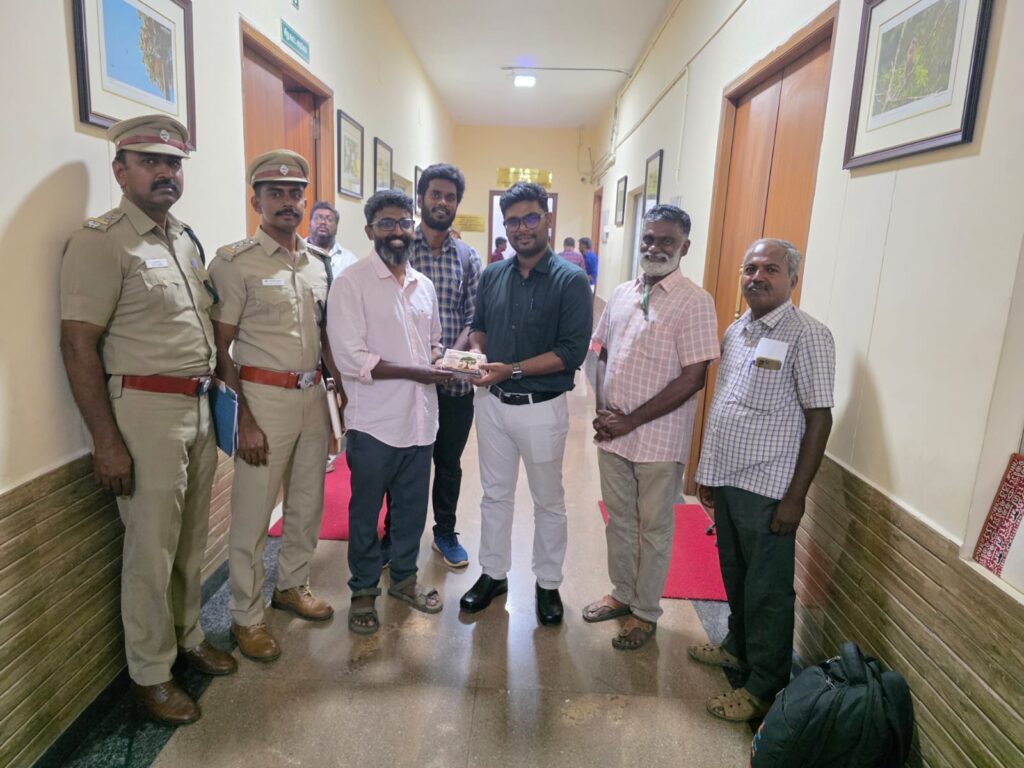
Simultaneously, the team met Mr. Venkatesh Prabhu, IFS, the District Forest Officer, Coimbatore. He welcomed Arulagam’s conservation-livelihood linkages and appreciated the excellent final output. He noted that such grassroots initiatives beautifully bridge tribal welfare with forest conservation. By turning raw forest produce into a premium, eco-packaged commodity, the project actively fosters self-reliance among indigenous communities. He assured continued departmental encouragement to expand this model to other forest fringe villages across the division.
Speaking on the initiative, S. Bharathidasan, Secretary of Arulagam, stated that the organization promotes sustainable harvesting techniques as an alternative to traditional methods that completely strip the trees. He pointed out that by leaving a portion of the fruit intact on the tamarind trees and harvesting without damaging the branches, they ensure that wildlife—including herbivores like elephants, as well as birds and insects—retains uninterrupted access to this vital food resource. Furthermore, he emphasized that protecting the existing tree population alongside planting new tamarind trees guarantees a sustainable source of income for tribal communities across generations.
The initiative received significant validation from WWF Landscape Coordinator Bhoominathan, who lauded its community-centric model. Mirroring this support, tree whisperer Mr. K. Syed pledged to collaborate on an ambitious reforestation drive to plant 1,000 tamarind saplings in key forest fringe villages, enhancing both wildlife habitats and community green cover.
The VDVK initiative in Coimbatore demonstrates how value addition, sustainable harvesting and community participation can work together to improve tribal incomes while conserving forest ecosystems. As the programme expands, it has the potential to create stronger market linkages for forest produce and establish a sustainable livelihood model for tribal communities across the region.